Find a real device loan or reuse contact first
A local device loan can solve a short-term mobility problem while a long-term application is pending. The right search starts with your state Assistive Technology Act program, Centers for Independent Living and a trusted local aging-services or nonprofit referral.
Start with a trusted local directory instead of a national giveaway ad
If you need a wheelchair after surgery or a scooter for daily activities, an online advertisement promising free equipment everywhere is rarely the fastest route. A local program can only offer devices it has, and most charities do not maintain a live national stock database. The first useful step is to identify whether you need a temporary loan, an ongoing medical device, a refurbished purchase or a donated permanent transfer. That simple distinction prevents wasted phone calls.
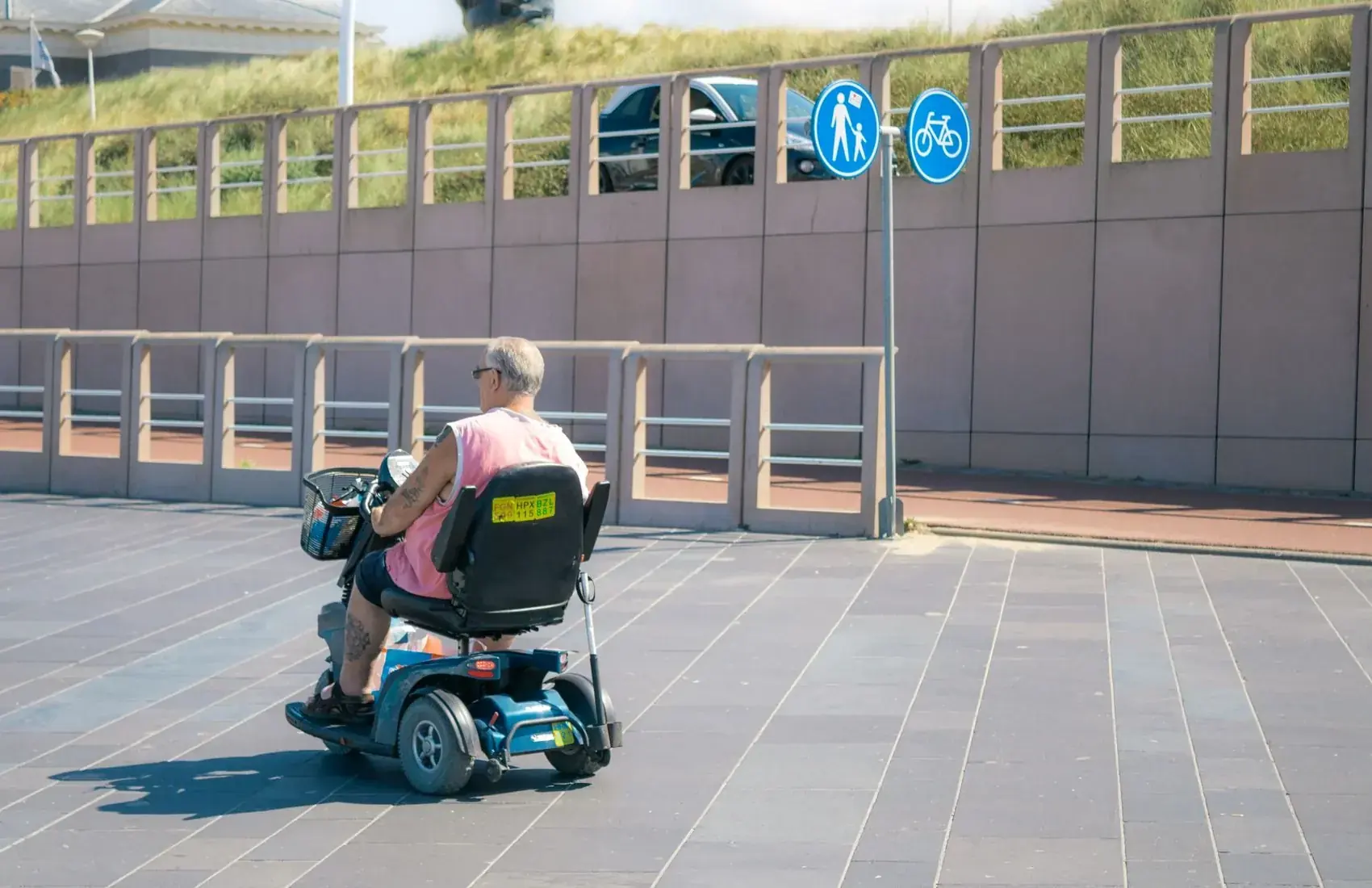
Search results for free mobility scooters near me often mix legitimate reuse services, commercial retailers, Medicare marketers and general transportation scooters. A medical mobility scooter must match a person's transfers, controls and home layout; a recreational electric scooter is not the same device. Ask each organization whether it provides power scooters, powered chairs, manual chairs, walkers or only referrals. Many 'medical loan closets' have no powered equipment at all.
This guide is designed to help you reach official state and local networks without submitting private benefit identifiers. Use the state finder below to locate trustworthy starting points, then call before visiting any site. We do not hold donated items or reserve them through this website. No resource listed here can promise a specific scooter is waiting for you.
What State AT Act programs actually do with medical equipment
The federal Assistive Technology Act, including provisions codified at 29 U.S.C. §3001 and related sections, supports state programs that help people with disabilities obtain and use assistive technology. The Administration for Community Living describes four key state-level activities: demonstrations, device loans, device reutilization and state financing. States may partner with nonprofit organizations, university centers or regional facilities rather than operating a single public equipment warehouse.
A device demonstration allows someone to try features before making a purchasing decision. A short-term device loan often supports a trial, training or temporary need, with return expected. A device reutilization service may redistribute donated equipment after inspection and refurbishing. Financing services may offer an alternative financial loan instead of a free device. These functions are distinct, so ask the program which one accepts mobility equipment requests in your area.
Your state's AT program can often explain where to find equipment reuse and testing partners. However, federal AT Act funding does not mean every state must supply a free power scooter to any resident. Inventory and accessibility vary widely, and powered chairs may require medical fitting. Use the official AT3 Center directory rather than assuming a social media seller is a state-approved outlet.
Find the approved state demonstration, loan or reuse program.
Ask a CIL or AAA about a county-level equipment partner.
Call about exact device, battery, fee, fit and return terms before travel.
Use the 50-state equipment loan and reuse starting-point finder
Every state has an Assistive Technology Act program or affiliated provider network, but program names, regional offices and services vary. A family in California may start with Ability Tools; a Georgia resident can investigate Georgia Tools for Life and its partners; someone in New York can ask about the TRAID program. Other states use university rehabilitation centers, Easterseals affiliates or independent disability service agencies.
The state selector below generates a practical contact route and explains which official directory to check. It does not automatically check a live warehouse, use your GPS coordinates or claim to have found nearby inventory. Select your state and the type of equipment you are seeking. The tool then shows the verified national AT3 directory, the independent living network and additional age-related resources when appropriate.
If a program directs you to a county or ZIP-specific partner, get the organization's full name, official number, opening hours and any deposit or loan duration before making the trip. Ask whether a power chair has been serviced and whether a clinician needs to confirm fit. The closest provider is not always the right provider if it cannot safely supply the correct device.
Find your official state equipment loan and reuse starting point
Choose your state, device and type of help. We show a curated official contact route, not fabricated live listings or an equipment guarantee.
No GPS, address, ZIP, medical ID or insurance details are collected. Official AT3, ILRU and ACL sites help you reach the correct state or local office; availability must be confirmed directly.
Short-term loans, device demonstrations and donated permanent transfers are different
A short-term medical equipment loan might last a few days or weeks while someone recovers from surgery. The borrower usually signs a use agreement, receives return instructions and may be responsible for lost pieces or damage. A demonstration device, by contrast, may be held only long enough for a person and therapist to compare seating, control layout or maneuverability. Both services are designed to return equipment for the next user.
A permanent reutilization transfer is different. A qualified nonprofit may sanitize and refurbish donated equipment, check function and transfer an item permanently or for an extended use period. Some providers require documentation of need or residency, an intake appointment, a one-time registration fee or payment for new batteries. You should know when ownership changes, whether repairs are included and what happens if the item stops working.
Before agreeing, ask the organization to write down the exact equipment type, loan duration, fees and extension process. If the device is an electrical chair, identify which charger belongs to it and how battery replacement is handled. A device offered for $0 is not automatically a bargain if the user cannot operate it safely or must immediately buy expensive batteries.
Why power scooters are harder to borrow than manual wheelchairs
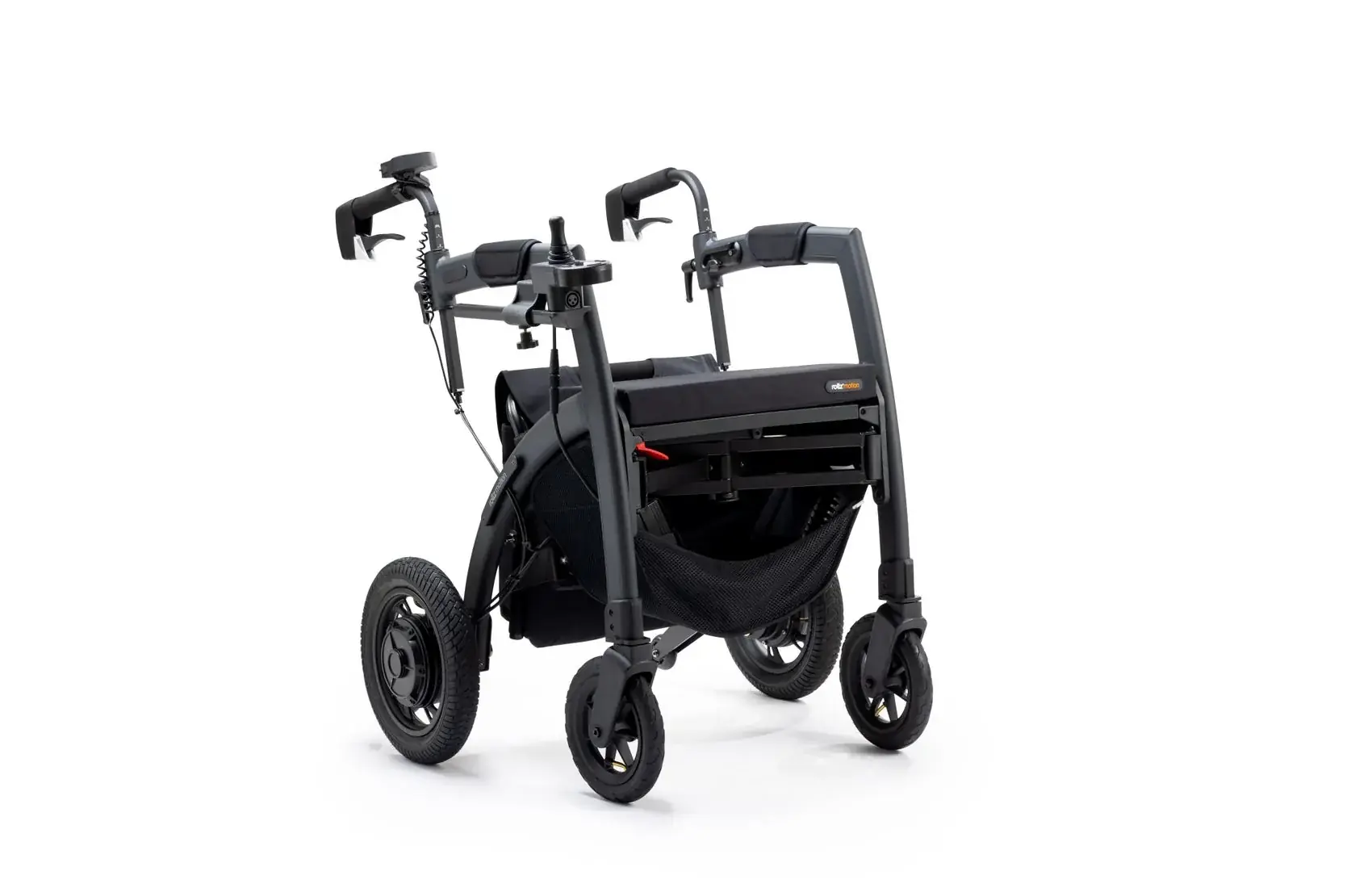
Medical equipment loan closets often have canes, crutches, walkers, bedside commodes and manual chairs because those devices are easier to store, clean and maintain. Power scooters and power wheelchairs require more space, compatible chargers, safe batteries and checks of controllers, brakes and seating. A donated power unit with a failed battery may be unavailable until a technician can inspect it.
An organization may list scooters on its website without having any in stock today. Ask when its inventory list was last updated and whether staff can hold a specific medically appropriate model. If a program only lends manual chairs, a temporary manual chair might be useful for a short period, but it should not be substituted for a person's prescribed complex rehabilitation power chair without a care-team assessment.
Many times the most practical referral is not the closest charity but the specialist reuse program your local AT center already knows. Ask about required measurements, a trained fitter, delivery and potential collection. Some providers lend equipment only within their own county or require the borrower to pick it up. Those practical limits are why phone confirmation matters more than a search ranking.
Centers for Independent Living can help find loan services and disability advocates
Centers for Independent Living, commonly called CILs, are community-based organizations that support independent living and disability rights. Their work may include peer counseling, information and referral, independent living skills and transition services. Some know nearby equipment loan closets, state AT networks or affordable wheelchair repairs. They are not all retail suppliers and do not all operate device warehouses.
The Administration for Community Living maintains information about these centers, and the ILRU directory lists CILs and related associations by state and city. Use an official directory to identify your region, then call the local center about the specific equipment and funding barrier. If they do not have equipment, they may know a nonprofit or state program that is better suited to the request.
Someone living with a disability who needs a chair to return to work can ask for local vocational rehabilitation and employment accommodation referrals as well. A caregiver searching for a home medical loan might be directed to a hospital social worker or Area Agency on Aging. Explain your goal so the counselor can distinguish a short-term lending problem from an insurance appeal.

Lions Clubs, Elks Lodges and St. Vincent de Paul conferences: call the chapter
National service organizations such as Lions Clubs, Elks Lodges and St. Vincent de Paul conferences include local chapters that undertake different community support projects. Some branches have organized medical equipment loans, donated wheelchairs or referral partnerships. But there is no confirmed national policy that every chapter operates a free power scooter closet. A listing from another city should not be presented as local availability.
A real example is Boulder Elks Lodge 566, whose publicly posted newsletter describes a community medical loan closet with walkers, wheelchairs, crutches and raised toilet seats. The chapter asks people to sign equipment out and return it. That record shows how a local lodge can help, but it does not establish that powered scooters are available today or that Elks lodges nationwide offer identical services.
Ask a local chapter whether it runs the service directly or knows another volunteer group that does. Confirm its service area, loan duration, operating hours and contact person before visiting. Many small programs rely on volunteers, so their phones and inventory can change quickly. If the response is a referral, contact the receiving organization separately before sending documents.
FODAC's Georgia equipment program illustrates real costs and stock limits
Friends of Disabled Adults and Children (FODAC), EIN 58-1709436, publishes a medical equipment program serving Atlanta, Savannah and regional partners in Georgia. Its official site lists manual and powered wheelchairs, scooters, walkers, bathroom aids and other donated home medical equipment, depending on what is in stock. This is a real charity program, not a nationwide federal scooter grant, and people outside its area need to ask for referral partners.
FODAC states that donated equipment has no purchase price but there is a lifetime $25 registration charge for new clients, and powered items may need replacement batteries purchased separately. Equipment is distributed on a first-come, first-served basis and the organization asks callers to check availability before arriving. Delivery, where available, may have a separate fee. Confirm current charges and identification requirements on the official intake page before traveling.
The clinic or charity still needs the user's height, weight and functional needs to match a chair appropriately. Ask whether trained staff can review the controls and fit, whether an item will be held, and when pickup is possible. If you are far from Georgia, the better route may be your own state's AT program rather than a long-distance trip hoping the same item is available.
| State AT Act device reuse | Reused chairs, scooters or other AT as available | State resident; local partner criteria and inventory | Often low-cost or free; varies | AT3 state program directory |
| State AT short-term device loan | Demo power/manual chairs and other aids | Trial/training needs; return agreement | Typically no-cost/low-cost loan; check deposit | AT3 device loan program |
| Centers for Independent Living (CIL) | Equipment referrals and independence assistance | Regional disability service area; local services | Information/referral usually free | ILRU or ACL CIL directory |
| Eldercare Locator / AAA | Aging-network referrals, local equipment leads | Older adult/caregiver in supported area | Locator referral free; device costs vary | eldercare.acl.gov / 1-800-677-1116 |
| Local Lions/Elks/SVdP chapters | Walkers/manual chairs, occasional powered aid | Chapter service area and live inventory | May be a free returnable loan | Call the local chapter directly |
| FODAC (Georgia regional network) | Refurbished chairs, scooters and HME as stocked | Georgia service area and matching intake | Free equipment; $25 registration; batteries extra | FODAC official medical equipment page |
| Hospital or rehab discharge desk | Short-term chair, walker or loan referral | Clinical discharge need, local arrangement | Facility or loan partner rules | Treating hospital social worker |
| Vocational rehabilitation referral | Work-related AT and funding navigation | Eligible applicant with employment need | Plan and state program dependent | State VR agency / counselor |
All amounts, inventories and processing times vary by the responsible program. Read the official portal and confirm costs before visiting.
An advertised $0 device can still have fees, batteries or transport costs
A description of 'free wheelchair' may refer only to the equipment itself. A loan service might require a refundable security deposit; a reuse program might charge a modest registration fee; a powered scooter may need new batteries, a compatible charger or professional adjustments. It is safer to ask for an itemized explanation than to assume every program has one universal $0 to $150 price.
Before accepting a used power device, ask for the make and model, charge history, condition of brakes and tires, evidence of maintenance and whether the supplied charger matches the battery system. Check frame damage, seating stability and turning radius. If the device requires medical positioning or unusual controls, a clinician or assistive technology professional should determine whether it is safe for the intended user.
A program cannot promise that a donated chair meets Medicare clinical requirements simply because it was safe for a previous owner. Ask whether the provider offers any warranty, help with repairs, battery replacement or a suitable return procedure. A fair intake should explain these limits without pressuring someone to share a Medicare identifier or pay a broker fee.
Medical equipment loan closet near me searches after surgery: what to ask
After a hip, knee or other procedure, a person may temporarily need a manual wheelchair, walker or shower chair. A medical equipment loan closet near me can be a useful search phrase, but the correct type of equipment and duration should come from the discharge team. Hospital case managers, physical therapists, home health coordinators and community loan programs often know short-term resources better than a general shopping website.
Ask the discharge clinician whether a temporary loan is safe during transfers, whether the patient can self-propel a manual wheelchair and whether the hospital has arranged insurance-covered equipment. If a chair is borrowed, check height, footrests, wheel locks and whether a caregiver can transport it. A portable power scooter may be unnecessary or unsafe during recovery from some procedures.
Also ask whether the closet has cleaning procedures between borrowers, a repair contact and an extension option if rehabilitation takes longer. If insurance has authorized a permanent chair, clarify which device should be used while it is delivered. The aim is to support safe recovery, not to secure the most expensive piece of equipment.
How to donate a used scooter without giving someone unsafe equipment
Donation programs need working equipment that can be used safely. If you have a chair or scooter that is no longer needed, first contact a local reuse center, CIL referral desk or nonprofit equipment exchange. Ask what models they accept, whether they have trained technicians and whether the device needs to include a charger or service record. An organization might decline an unsafe, obsolete or excessively damaged model.
Clean visible surfaces using instructions suitable for the materials; do not dismantle electrical parts or use unapproved cleaners on electronics. Gather the manual, charger and available maintenance notes. Remove personal items and any identifying labels that are not necessary for safe operation. The receiving organization should handle inspection, appropriate sanitation, refurbishment and fit before giving the device to another person.
Never promise a direct personal match through a social media post without considering safety, transfer ability and whether the person can operate the chair. If the recipient needs a complex rehabilitation wheelchair, a generic donated scooter should not replace clinical assessment. Our application page includes a separate equipment donation inquiry desk, but it is not a central warehouse or a guaranteed matching agency.
Find free wheelchair programs near me without falling for a misleading search result
Free wheelchair programs near me is a practical query, but search results are most useful when narrowed to the type of service: loan, reuse, demonstration or medical insurance. Start with your state AT program using the AT3 directory, use the ILRU CIL list to identify a local referral center, and consult the Eldercare Locator if the borrower is an older adult. A hospital social worker or VR counselor may be another relevant contact.
When you reach a person, ask exactly what equipment is in stock, who qualifies, whether a fitting is available, how long a loan lasts, and which fees and repairs are the borrower's responsibility. Note the organization's name and phone number. If the program sends you elsewhere, confirm the next provider directly. These steps can prevent hours of travel to a closet that only lends crutches or manual wheelchairs.
Finally, decide whether temporary borrowing actually meets the long-term need. If the person cannot safely complete essential activities at home, speak to the treating practitioner about Medicare, Medicaid or VA equipment coverage even if a loan is available today. A well-chosen temporary aid and a well-documented medical claim can work together, but neither is a substitute for the other.
Historical Program Evolution: From 2018–2020 CMS PMD Prior Authorization to 2026 Mobility Grants
Earlier loan inventories and pandemic exceptions are historical context, not confirmation of today’s eligibility or device availability.
CMS power mobility policy and State Assistive Technology Act demonstration, loan, and reuse services established separate routes for medical insurance and community equipment.
Pandemic-era clinical flexibilities, equipment supply disruption, and emergency community reuse responses changed intake and temporary lending logistics.
Medicare power mobility policies, community independence referrals, rehabilitation seating practices, and aging/disability service networks continued evolving.
Original Medicare DME, Medicaid, PACE, condition-focused support, 29 U.S.C. §3001 State AT networks, CILs, and local loan closets remain separate; confirm current inventory and authorization.
Local wheelchair loans and reused equipment FAQs
Program staff, clinicians and payers decide eligibility, availability and medical fit. Our answers explain how to approach them.
Where can I get free mobility scooters near me in 2026?
Start with your state's AT Act program, a Center for Independent Living or your local aging network. Local inventory is not guaranteed, and some programs offer only demonstrations, referrals or short-term equipment loans.
How do I find a medical equipment loan closet near me?
Search the official AT3 state directory and ILRU CIL directory, then ask hospital discharge coordinators and community nonprofits serving your county. Confirm the equipment type and loan terms before visiting.
Are there free wheelchair programs near me for low-income adults?
Some nonprofit reuse centers may transfer donated chairs at little to no purchase cost, while state AT programs coordinate loans and demonstrations. Eligibility, stock, delivery and replacement battery expenses depend on the local provider.
Does every Lions Club, Elks Lodge or St. Vincent de Paul conference lend scooters?
No. Programs are managed locally, and a chapter that lends crutches or manual wheelchairs may have no powered scooters. Contact the specific office before relying on a nationwide organization name.
Do medical loan closets charge a deposit or membership fee?
Some offer free loans; others require a deposit, registration or modest fee. For example, FODAC lists a $25 lifetime registration fee, and power equipment may require separately purchased batteries.
Can a loan closet provide equipment after surgery?
Often a manual wheelchair, walker or other short-term aid may be available, but the discharge care team should confirm that the device is safe. Ask about borrowing period, sanitation, footrest fit and how to return it.
Is a refurbished power wheelchair safe to borrow?
It can be appropriate after competent inspection, cleaning, battery and brake checks, and proper user fitting. A complex chair with specialized seating or controls should be assessed by a qualified professional before use.
Can I keep a wheelchair donated by a charity?
Some reutilization programs permanently transfer ownership; others operate returnable loans. Ask for a written receipt or agreement stating ownership, loan deadline, repair responsibility and whether any fees apply.
Official program links and next-step resources
These are primary government and nonprofit source pages. They do not imply we have verified current local inventory or approved a benefit.
Contact the right program for your state and device
Select a state, call the listed official referral network, and verify availability, device safety and any loan fees before traveling.
Find Local Equipment Contacts