Understand clinical eligibility before choosing a model
A Pride scooter is not automatically approved just because its manufacturer lists Medicare-related models. The correct decision starts with safe indoor mobility needs, the exact product and supplier coding, and a written cost explanation before buying or financing.
Does Medicare cover Pride Mobility scooters? Begin with the person, not the label
Pride Mobility sells a wide range of consumer mobility products. Its website has a page titled Pride Mobility Scooters Covered by Medicare, which lists product families from Go Go travel scooters to larger Victory and Maxima models. That page is useful for recognizing examples marketed for medical mobility, but it does not mean a Medicare card will pay for any scooter selected from the list. A beneficiary still needs to qualify under the actual federal benefit and supplier rules.
Original Medicare Part B covers medically necessary power-operated vehicles and power wheelchairs when a mobility limitation substantially impairs important daily activities inside the home. A treating practitioner documents the problem, considers simpler aids and orders equipment appropriately. An enrolled DMEPOS supplier must identify a medically suitable item and follow the current authorization process. Someone wanting a scooter primarily for the shopping mall or outdoor recreation may have a genuine need, but that purpose alone is not Medicare's typical power mobility test.
Before calling a Pride dealer, write down the everyday problem you need to solve. Can you reach and use the bathroom safely with a walker? Can you move between rooms to dress and eat? Can you transfer onto a scooter seat and work the tiller reliably? If not, a power wheelchair or another aid may be more suitable. This question is more productive than asking a salesman to guarantee the brand is covered.
Go Go, Victory, Maxima, Jazzy and Quantum Rehab solve different problems
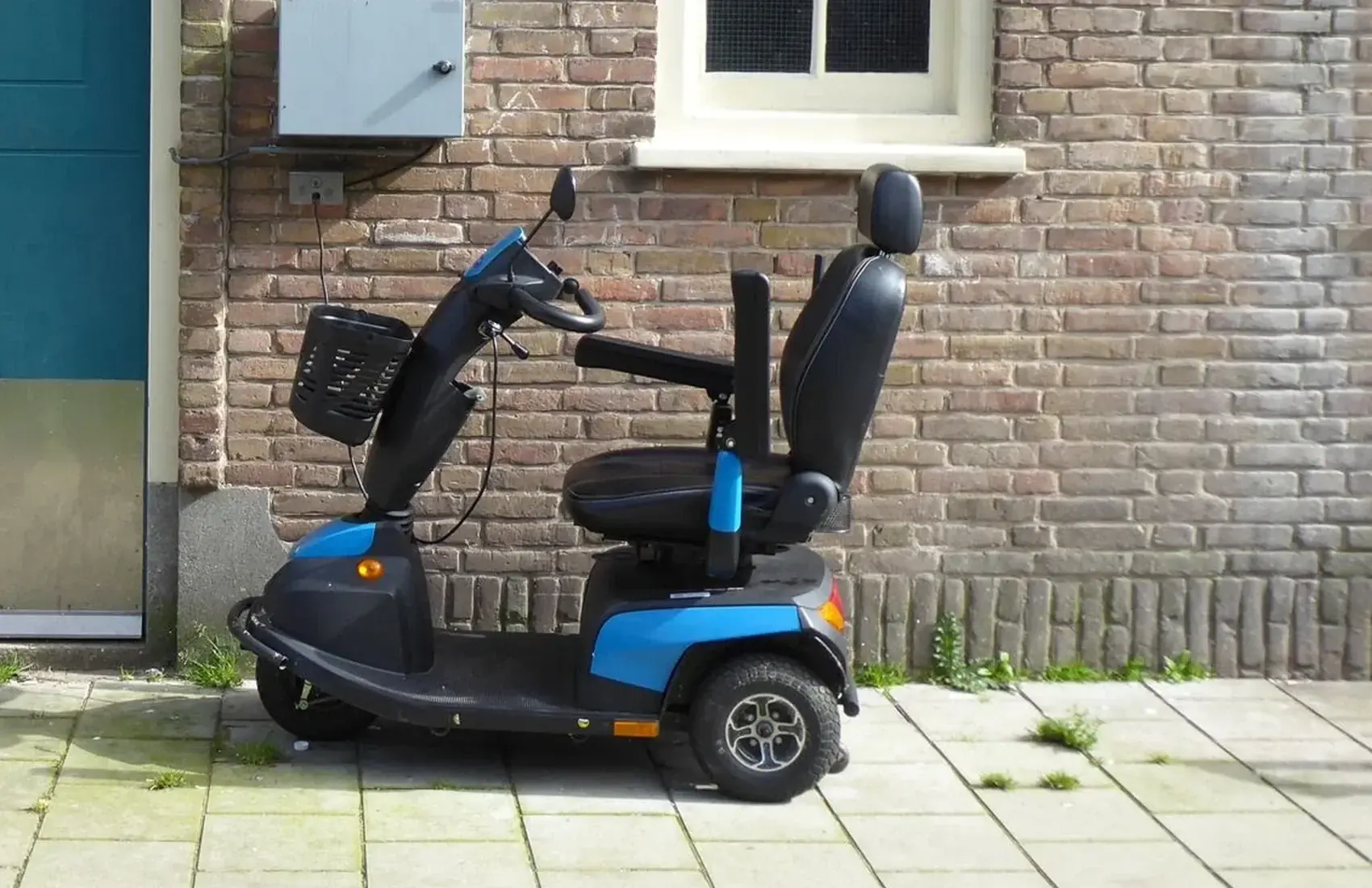
Pride Mobility Products Corporation makes Go Go travel mobility scooters, Victory and Maxima scooter families, Jazzy power chairs and other equipment. Its family of companies also includes Quantum Rehab, a different line focused on complex rehabilitation power wheelchairs and positioning systems. These names reflect different intended uses and configurations, not interchangeable Medicare billing categories. A Jazzy chair with joystick controls is not simply a Go Go scooter with another name.
Go Go travel units emphasize portability and disassembly. Victory models often offer different seating and performance choices, while Maxima is designed around heavier-duty support. More features do not prove medical necessity. The Pride manufacturer model catalog currently shows examples such as Go Go Elite Traveller Gen 3, Go Go Ultra X Gen 3, Victory 10.2 and Maxima. Product names, packages and availability may change between manufacturer listings and retail providers.
| Go Go Elite Traveller Gen 3 | Travel scooter; Pride SC443E series | Home MRADL and exact coding/supplier review required | Not a guaranteed Medicare-paid retail price | Pride Medicare models / enrolled DMEPOS supplier |
| Go Go Ultra X Gen 3 | Compact travel scooter; Pride SC493 | Tiller control, safe transfers, indoor clinical suitability | Coverage dependent; optional upgrades extra | Pride model catalog / supplier quote |
| Victory 10.2 / Victory 10 | Mid-size scooter series; multiple SKUs | Correct HCPCS and documented home use | Approved amount differs from MSRP | Pride official models / PDAC if applicable |
| Maxima scooter models | Heavy-duty scooter configurations | Clinician documents actual weight, transfer and fit needs | Supplier and plan-specific allowed amount | Pride model listing / official supplier |
| Jazzy power chair | Joystick-controlled chair category | Power-wheelchair criteria and specialized features if needed | Covered DME share or private retail price | Pride power chair / CMS PMD criteria |
| Original Medicare + QMB / Plan G | Covered appropriate DME from enrolled supplier | Confirmed program status and Part B coverage | QMB no covered cost-sharing; Plan G deductible may remain | CMS QMB / Medicare plan guidance |
| Participating dealer / CareCredit | Retail Pride scooter or upgrade financing | Credit approval, dealer participation and loan terms | APR, promotional interest, fees and total cost vary | Pride FAQ / CareCredit written agreement |
| Local nonprofit equipment reuse | Refurbished mobility aid, inventory-dependent | Local residency and equipment fitting | Donation, registration, batteries or delivery vary | AT3 directory / FODAC local intake |
Models, approved amounts, device stock, actual fees and processing times are determined by the relevant payer, supplier, charity or lender. Check official terms before acting.
HCPCS and PDAC coding: an important check before choosing a Pride model
Medicare does not pay a claim based on an advertisement that a product is a Class II medical device. The supplier must use a correct Healthcare Common Procedure Coding System (HCPCS) billing code. Power-operated vehicles and power wheelchairs occupy distinct code families; exact classification and claim documentation matter. A generic store receipt that says 'Pride Go Go' is not the same as a valid Medicare supplier claim.
The Pricing, Data Analysis and Coding contractor, commonly called PDAC, maintains product classification resources for items that require coding verification. CMS policy article A52498 specifies that products billed under particular power mobility HCPCS codes require an appropriate written coding-verification determination. A model appearing on a product classification list helps establish coding, but it does not determine that an individual patient needs that model or that a particular supplier will be reimbursed.
Ask the enrolled supplier to write down the exact brand, model number, intended HCPCS code, whether PDAC coding verification is required, and whether the model appears under that code. Ask separately whether prior authorization is required for this code on the date you are being evaluated. If a dealer cannot explain those points, do not rely on its promise to reimburse you for a cash purchase. Searches for Pride Mobility scooters covered by Medicare should lead to a model-specific supplier quote, not a brand-wide promise.
Start with MRADLs, transfers, tiller control and the actual home layout.
Ask the supplier for model, HCPCS, PDAC status and authorization requirements.
Get Medicare liability and financing terms in writing before ordering.
The medical necessity test asks about home activities, transfers and safe steering
CMS National Coverage Determination 280.3 centers on mobility-related activities of daily living, including toileting, feeding, dressing, grooming and bathing. The treating clinician evaluates whether a cane or walker adequately solves the limitation, whether an appropriately configured manual wheelchair could be used, and whether the patient can safely operate the powered device. It is a clinical decision that should be documented in the medical record, not a self-declared eligibility score.
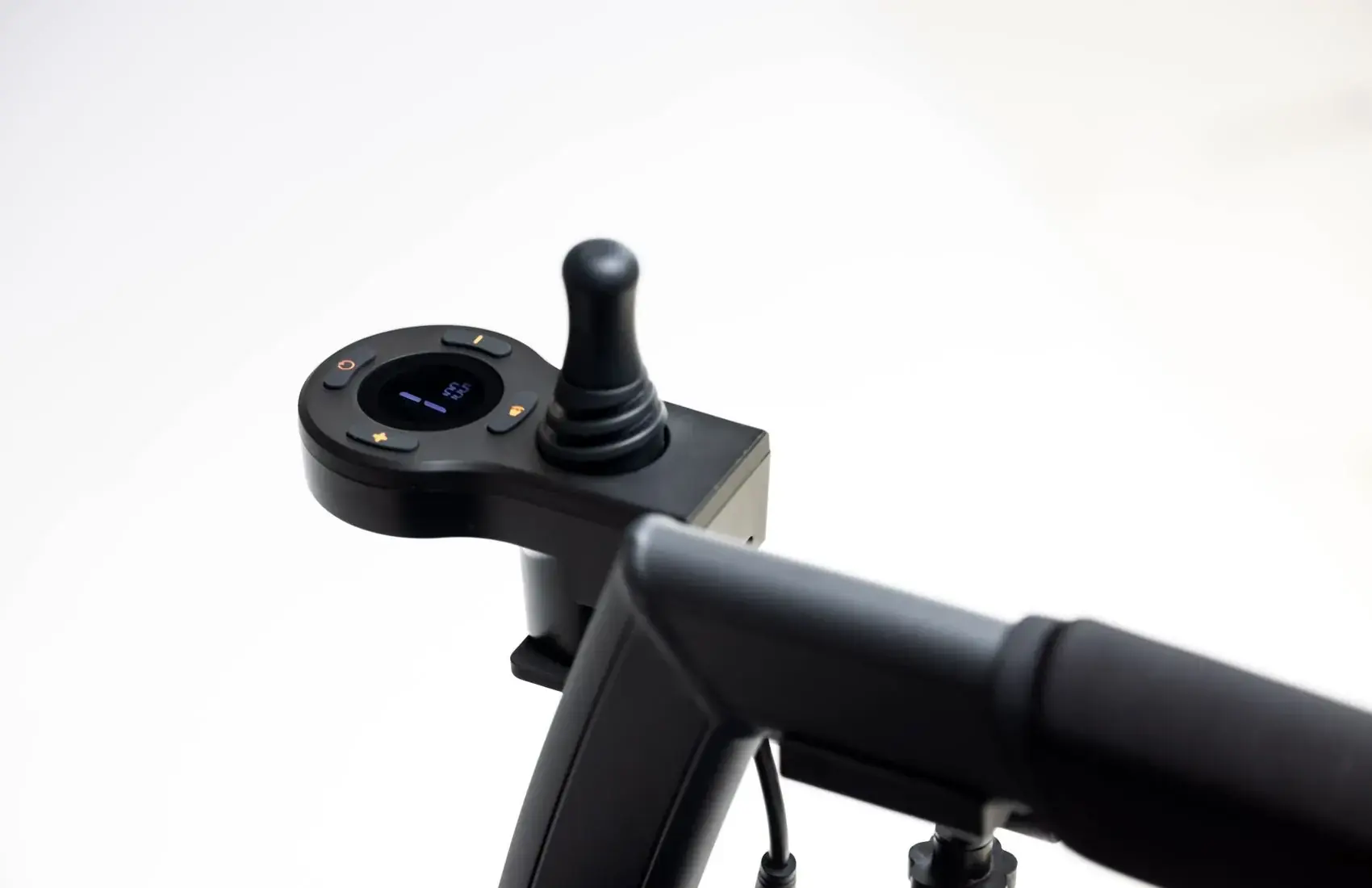
A tiller-steered scooter usually requires sufficient hand function, postural stability, vision or judgment and safe transfers. A patient who cannot steer the device or who cannot fit it through the bathroom door may not benefit even if the scooter's weight capacity and advertised driving range look attractive. A power wheelchair with a joystick or alternate control might address different functional needs after assessment. A showroom demo is useful but cannot replace an examination of the actual home.
Use a plain-language medical history of daily functional difficulty, not an exaggerated statement designed to trigger a claim. If someone can walk from the bedroom to the kitchen but frequently falls while reaching the toilet, describe what happens and how often. The specialist or supplier can then consider seating, turning radius and safe transfers for the proposed HCPCS category. Medicare does not require choosing Pride over another manufacturer.

Pride Go Go Medicare coverage: portability alone is not an eligibility reason
The Go Go family includes various folding, lightweight and disassembling travel scooters. Pride's current Medicare-related manufacturer list includes Go Go Elite Traveller Gen 3 and Go Go Ultra X Gen 3 examples, alongside earlier configurations. These may be worth discussing when the clinical team needs a particular turning radius or tiller layout. However, the presence of a model on a manufacturer's promotional page never guarantees a claim will meet Medicare's coverage criteria.
A small travel scooter can be attractive because it is easy to load into a vehicle. Original Medicare's usual power mobility benefit focuses on safe function at home, though, not on transporting the device to a vacation destination. If an expensive compact battery, folding feature or travel accessory is not covered as medically necessary, the consumer may owe for that optional feature. A dealer must distinguish covered equipment from excluded upgrades in advance.
Ask for the Go Go's clear width, turning radius, available seat adjustments, maximum safe user weight, battery instructions and service arrangements. Make sure the device can pass the narrowest doorway and complete safe transfers at home. If the person needs complex seating, a compact travel model may be a poor fit even when it appears more affordable or fashionable.
Victory and Maxima scooters need an assessment of real capacity and indoor fit
Pride's manufacturer list includes Victory 10, Victory 10.2 and Maxima configurations. These models may have different turning, suspension, seat and weight-capacity characteristics from compact travel scooters. A higher capacity does not automatically make the device the right or reimbursable option. The treating team and supplier should connect the actual body support, transfer needs and home environment to a medically necessary code.
A bigger scooter can be harder to turn within a bedroom or bathroom. Taking measurements before delivery is especially important with long platforms and larger seats. The relevant figure is the usable doorway opening and turning space after furniture and door hardware are considered. A stable seat does not eliminate the need to evaluate how a person gets on and off the device safely or maintains posture while driving.
What is the real Medicare price after the $283 Part B deductible?
Medicare.gov lists the 2026 Original Medicare Part B annual deductible as $283. After the applicable deductible, beneficiaries generally pay 20% of the Medicare-approved amount for covered DME when the supplier accepts assignment. The Medicare-approved amount is not necessarily the manufacturer's suggested retail price or the amount displayed by an online retailer. You need the payer's actual allowed amount and correct equipment authorization to know the final bill.
For example, if the assigned Medicare-approved amount were hypothetically $2,500 and the entire $283 deductible remained, the patient could owe $283 plus 20% of $2,217, or $726.40. That is a math example, not an actual Pride model quote. If the annual deductible has already been met, the illustrative portion on that same amount would be $500. Medicare Advantage has plan-specific DME cost-sharing and supplier rules, so you cannot simply apply Original Medicare figures to every coverage card.
Ask the supplier whether it accepts assignment, whether the item will be rented or purchased, whether prior authorization is necessary, and what unapproved accessories or upgrades cost. Ask for a written estimate before accepting delivery. A retailer that only quotes '80% covered' without an approved claim, payer amount or clear supplier status has not established your actual liability.
QMB and Medigap Plan G can change covered costs, not eligibility
The Qualified Medicare Beneficiary (QMB) program protects enrolled people from being billed by Medicare providers and suppliers for deductibles, coinsurance and copayments on Medicare-covered Part A or B services and items. That federal billing protection does not authorize a model that Medicare does not cover or require a supplier to provide optional retail upgrades. Ask your state and insurer to confirm QMB status for the actual date of service.
Standard Medigap Plan G generally covers Original Medicare Part B coinsurance but normally does not cover the annual Part B deductible for people newly eligible for Medicare after 2019. That is why a statement like 'Plan G makes a Pride scooter free' needs qualification. Some people may have QMB or other qualifying protections, whereas someone with Plan G may still owe the remaining deductible on the hypothetical approved amount.
Part D is not the relevant benefit for a mobility scooter. Original Medicare Part B, a Medicare Advantage plan or state Medicaid equipment coverage may be the right payer, depending on the person's enrollment. Ask about coordinated benefits rather than submitting the same bill through unrelated programs or making a cash purchase based on a promise that another policy will reimburse it later.
Pride scooter financing and CareCredit are credit agreements, not grant awards
Pride's official customer FAQ says many participating authorized providers offer financing through CareCredit, subject to credit approval. That may be a purchase option when the needed model or selected upgrades are not covered by insurance. It is not a government voucher, a charitable award or a promise that any dealer will extend credit. Financing terms, participating providers, purchase amounts and promotional eligibility can change.
CareCredit's own FAQ explains its 'No Interest if Paid in Full' offers: interest can accrue from the purchase date and be charged if the full promotional balance is not paid before the deadline. This is deferred-interest credit, not necessarily a 0% annual percentage rate. Missing the payoff deadline can make the final cost much higher than the original retail price, even after regular payments. Other reduced-APR plans have fixed monthly payments and their own contract terms.
Before signing up for Pride scooter financing, ask for the true cash price, any taxes or delivery, service-plan charges, total financed amount, APR, minimum payment, promotional end date, deferred-interest treatment and cancellation or return terms. Compare those numbers with a nonprofit refurbished device, your actual insurance coverage and a written bank or credit-union offer when appropriate. The calculator below illustrates monthly payments but cannot predict what a lender will approve.
Compare the Medicare 80/20 estimate with monthly financing in one place
Our private comparison tools below answer two separate questions. The Medicare estimator shows how the 2026 Part B deductible, QMB or Medigap coverage might affect a hypothetical Medicare-approved DME amount. The financing estimator calculates monthly payments on an ordinary fixed-rate amortizing loan, and it can show the monthly payoff target needed to clear a deferred-interest promotional balance before the deadline.
These are education tools. A fixed-rate payment estimate assumes an ordinary loan with the APR and months you enter, no late fees and no additional transaction costs. The deferred-interest figure simply divides the promotional principal by the remaining months; it does not calculate accrued back-interest or substitute for the actual card agreement. Actual promotions and interest rates are set by a credit provider and may differ from these examples.
Do not enter a credit card number, Social Security number, Medicare MBI, household medical diagnoses or passwords. All calculations run in the browser, and the website does not process a credit application. If an insurer has not affirmed coverage, a loan calculator cannot make the scooter medically eligible. Use both tools as questions for the real supplier or lender before making a financial commitment.
Medicare 80/20 and income guideline calculator
Enter a hypothetical Medicare-approved amount, not the manufacturer MSRP. Check how remaining 2026 deductible, QMB or Medigap can affect covered costs.
A hypothetical coverage illustration only. QMB protects Medicare-covered cost sharing but not excluded upgrades; Medigap and 200% FPG do not establish scooter eligibility. Verify payer and supplier authorization.
Compare monthly loan payments and promotional payoff targets
Estimate fixed-APR installment payments separately from a deferred-interest promotion. No creditor is contacted, and no promotion or APR is guaranteed.
Fixed-APR estimate assumes standard amortization without extra fees. The promotional target is principal divided by months only; deferred accrued interest, late fees and lender terms are NOT estimated. Confirm actual financing disclosures.
Manufacturer warranty, battery replacement and local dealer support matter
A scooter's purchase price is only part of ownership. Batteries eventually need service, tires wear, and a malfunctioning controller or charger can prevent essential trips. Pride directs owners to authorized providers for replacement parts and repairs, and its warranty and extended service plans have model-specific coverage and exclusions. Ask for the actual written terms that apply to your serial number, including battery responsibility and the cost of a service visit.
Some travel models use proprietary lithium packs or charging instructions. Pride warns against substituting unrelated chargers and publishes model-specific battery guidance. When comparing two scooters, find out what an approved battery costs, whether it must be installed by a provider, the nearest authorized dealer, and how long repairs take. A cheap purchase can become expensive if the only repair option involves shipping or unavailable parts.
What to do when the preferred Pride scooter is not covered
A coverage denial does not mean there is no legitimate path to mobility support. Ask for the written Medicare or plan decision and whether missing documentation or the proposed HCPCS category can be reviewed. A clinician may recommend another scooter or power wheelchair that better addresses essential daily activities in the home. Do not exaggerate symptoms or ask a provider to code a retail travel scooter under an unrelated category.
For people without coverage for their preferred model, a trusted equipment reuse center or short-term loan may be more affordable than credit. FODAC and state AT Act programs can sometimes connect residents to refurbished equipment or device demonstrations, subject to local supply and fitting. A donated device must still be safe for the intended user. Pride model names on a resale listing do not establish either medical need or usable battery life.
The best next step is a short set of questions: What is the actual functional limitation? Which device is safe in the home? What is the exact model and Medicare code? What will the patient owe in writing? What does credit truly cost if financing is needed? When you have those answers, you can make a decision without relying on a 'free Pride scooter' advertisement or an unaffordable monthly promise.
Historical Program Evolution: From 2018–2020 CMS PMD Prior Authorization to 2026 Mobility Grants
Historic rules, temporary emergency allowances and older price lists cannot establish individual coverage or availability for 2026 claims.
Medicare PMD documentation, supplier coding and prior authorization continued evolving while local equipment reuse and warranty programs supported repairs.
Emergency clinical flexibilities, medical equipment supply shortages and battery procurement disruptions affected some service and supplier processes.
CMS clarified certain power mobility and accessory requirements; suppliers continued applying warranty, repair, replacement and clinical fit rules.
Original Medicare Part B, Medicaid, VA PSAS, manufacturer providers and local reuse centers remain distinct. Verify current HCPCS codes, authorization, costs and availability.
Pride scooters, Medicare and financing FAQs
These answers explain general pathways. No claim, repair, purchase or financing application is approved by this site.
Which Pride Mobility scooters are covered by Medicare in 2026?
Pride lists selected Go Go, Victory and Maxima scooter models on a Medicare-related manufacturer page. But individual coverage requires medical necessity, correct HCPCS coding, supplier compliance and any necessary authorization; no model name guarantees payment.
Does Pride Go Go Medicare coverage include every travel feature?
No. A portable Go Go scooter may qualify only when the specific item meets Medicare criteria and is appropriate for in-home daily activities. Folding, travel and optional upgrades are not automatically medically necessary or payable.
How much is the Part B deductible for a covered scooter in 2026?
The annual Original Medicare Part B deductible is $283. After the remaining deductible is met, the usual coinsurance is 20% of the Medicare-approved amount for an assigned covered item, not necessarily 20% of retail MSRP.
Will QMB eliminate Medicare scooter coinsurance?
Confirmed QMB beneficiaries are protected against provider or supplier billing for Medicare-covered deductibles, coinsurance and copayments. The protection does not pay for an excluded retail upgrade or an item Medicare never approved.
Is CareCredit financing the same as a free mobility scooter grant?
No. CareCredit is credit subject to approval and contractual interest or promotional terms. Deferred-interest offers can charge interest from the original purchase date if the promotional balance is not paid in full by its deadline.
What should I ask a Pride dealer about HCPCS or PDAC?
Request the full model number, proposed HCPCS billing code, whether PDAC coding verification is required and the supplier's Medicare enrollment status. A manufacturer's marketing page is not an individual claim decision.
Is a Jazzy power chair the same as a Pride Go Go scooter?
No. Jazzy is a power-chair family with a different control and seating approach, while Go Go products are generally tiller-steered travel scooters. A clinician should assess transfers, posture and the home before choosing a category.
Are used Pride scooters eligible for Medicare or manufacturer warranty?
A private used retail purchase is not automatically eligible for an insurance reimbursement claim. Warranty transferability, battery condition and approved supplier rules must be checked separately before buying.
Use official policy, manufacturer and nonprofit sources
Source pages and actual product classifications can change. Confirm the current edition and responsible program before sharing medical or financial records.
Get a written covered-cost and financing comparison
Ask your treating provider and enrolled supplier for the medically appropriate model, coding and cost. Compare any lender agreement with a genuine written cash and covered-price quote.
Compare Costs