
Why most clean-transportation rebates cover e-bikes, not kick scooters
A bicycle rebate is not a promise of a free electric scooter in the ordinary stand-up sense. Programs typically define an eligible bicycle as having two or three wheels, an electric motor, and fully operable pedals. The common Class 1, Class 2, and Class 3 categories describe how pedal assistance or a throttle may work and at which speeds the motor stops assisting. Local rules may narrow those classes further. An electric kick scooter without pedals generally falls outside the rules that fund e-bikes.
The difference matters financially and legally. If you buy an electric kick scooter before receiving a voucher and later learn that the program requires a bicycle with operable pedals, the purchase will usually be ineligible for reimbursement. Several programs also require applicants to wait for approval and use an approved retailer. Some select recipients randomly rather than first come, first served. An eligible applicant who follows every rule may still receive no award if a drawing is oversubscribed or funding is exhausted.
Commuter incentives also should not be confused with Medicare Part B durable medical equipment. Medicare's national mobility coverage standard, NCD 280.3, centers on limitations affecting mobility-related activities of daily living at home. A pedal-assist e-bike for a healthy worker, or a kick scooter for travelling between bus stops, is a transport purchase rather than a medically necessary power mobility device. A person with a physical disability might pursue both systems, but must use each program for its intended purpose.
2026 e-bike voucher programs: amounts, service areas and actual status
A free e-bike voucher is usually a local subsidy, not a universal federal check. If you search for a government electric scooter rebate for low income, check whether the actual offer covers an eligible pedal-equipped e-bike rather than a kick scooter. The published dollar amount is a maximum discount available to a qualified applicant who also wins a selection round, chooses an eligible model, and uses an approved retailer. Most programs do not send cash to an individual's bank account. The retailer reduces the purchase price at checkout and later receives reimbursement from a program administrator.
Because municipal funding windows move quickly, always read the program's live announcement before starting. The following examples are relevant to November 8, 2026. An application window described as closed should be treated as a research lead for future funding, not an open benefit.
Washington WE-Bike
$300 / $1,200Washington's 2026 onward program accepts applications from residents age 16 or older through March 29, the following year. The income-qualified $1,200 tier is for households at or below 80% of their county's median income; the $300 tier is broader. Applicants enter a randomized monthly drawing, and selected residents verify their eligibility before receiving a rebate. An application is not an award.
Washington DOT program rules ↗Ava Bike Electric
Up to $1,500Ava Community Energy offers instant rebates in Alameda County and for eligible Ava customers in San Joaquin County. Its base awards are $400 for standard e-bikes and $900 for cargo or adaptive bikes. Residents qualifying through CARE, FERA or EAP energy-rate assistance may receive $1,000 for a standard bike or $1,500 for cargo and adaptive models, plus eligible safety equipment support. Random drawings run monthly.
Ava Bike Electric official portal ↗Tampa eBike Voucher Program
Up to $3,000Tampa's 2026 voucher round offered $1,000 standard, $2,000 low-income, and $3,000 very-low-income awards to qualifying city residents. Applicants needed a quote from a participating local store and were chosen in a lottery. The city confirms its 2026 application window has closed. These amounts are historical for the 2026 cycle, not a currently redeemable coupon for new applicants.
Tampa city voucher status ↗Atlanta E-Bike Rebate Program
Up to $1,600Atlanta's September 8–22, 2026 application period has ended. For eligible city residents, the program used 2025 area median income tiers: $1,600 below 60% AMI, $1,100 at 60–80% AMI, and $550 for a higher income band. The award was deducted at an approved local bike shop. A further application period was anticipated in the following spring; confirm a new announcement rather than applying through an old link.
Atlanta Regional Commission rules ↗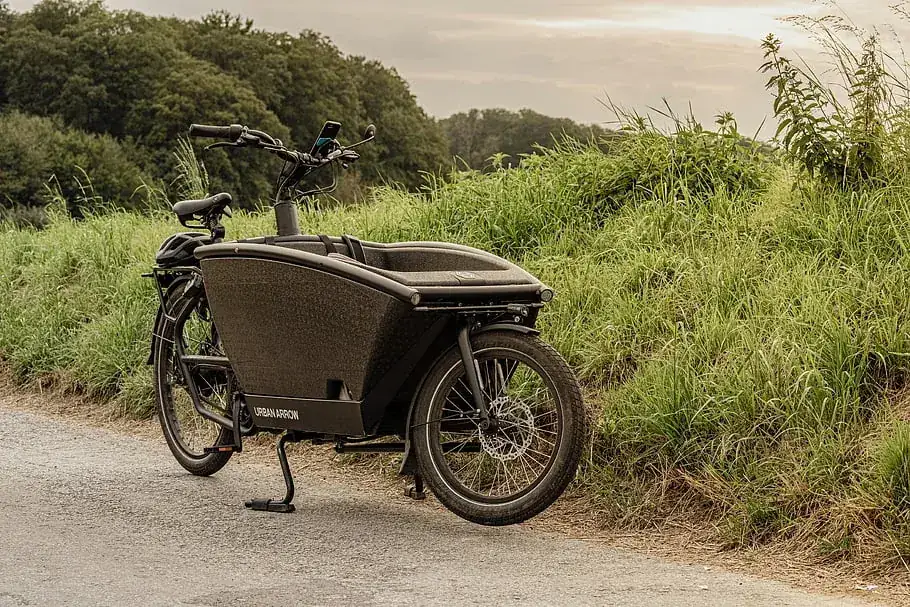
Point-of-sale vouchers can support cargo bikes and three-wheel designs.
Eligibility depends on the program's equipment list. Some city grants include adaptive models designed for riders who need extra stability or seating support.
California state incentive versus local utility rebates
The California Air Resources Board's statewide E-Bike Incentive Project offered up to $2,000 for eligible low-income Californians, including certain cargo and adaptive models. That statewide project concluded in December 2025. Old “apply now” articles often show its former application rules without disclosing that the project ended. For 2026, look at active local options such as Ava Bike Electric instead of assuming another CARB statewide intake exists. Programs like Clean Mobility Options also focus on community mobility projects and do not automatically issue personal e-bike purchase vouchers to every resident.
Ava's service area and participating retailer requirement are particularly important. Being a California resident is not enough to qualify for the Ava program. Someone in Los Angeles, Fresno, or San Diego does not become eligible merely by having a California address. Similarly, an electricity discount may establish an income-qualified tier under Ava, but the applicant must also meet the locality, age and selection rules.
Colorado statewide rebates and retailer credit are not the same thing
Colorado has operated a statewide income-qualified e-bike rebate process using designated registration windows and random selections. The statewide application portal lists its October 2026 registration as closed and points to new registration dates in January and March of the following year. Separately, Colorado's tax code provides a retailer-administered discount for qualifying new e-bikes sold in Colorado. For calendar-year 2026 retail tax years, the purchaser discount is $225, not the $450 amount from 2024–25.
Portland Rides includes high-value adaptive equipment
The Portland Clean Energy Community Benefits Fund supports Portland Rides, a city program aimed at making e-bikes more accessible to eligible lower-income households. Published maximums include $1,600 standard e-bikes, $2,350 cargo e-bikes, and $8,500 adaptive e-bikes, with a separate accessory allowance. The larger adaptive award is not an ordinary commuter rebate for everyone; it targets qualified participants whose disability prevents safe use of a conventional bike without adaptation.
As of November 2026, Portland's program website says the final 2026 standard/cargo rebate release took place August 17 and that adaptive awards for 2026 have been distributed. Standard/cargo applications may remain in the pool for later releases, and adaptive applications are expected to reopen in the following year. Applicants should use the latest Portland Rides official program information to confirm the right waiting process, not expect a fresh 2026 $8,500 award immediately.
Low-income commuter e-bike rebate comparison table (2026)
The first column identifies the program, the second the kinds of equipment the incentive applies to, and the final column tells you where to confirm the current status. Sort any heading to compare amounts or service areas. Program administrators can adjust funding, dealer lists, qualification thresholds and drawing calendars.
| Ava Bike Electric (CA)Open monthly drawings | New standard, cargo or adaptive e-bikes with pedals | Alameda County or eligible Ava customer in San Joaquin; CARE/FERA/EAP for income-qualified tier | $400–$1,500 rebate; buyer pays remaining qualified price and any uncovered items | Monthly lottery, 60-day redemption if selected; Ava official |
| Washington WE-BikeOpen to March 29, the following year | Eligible e-bikes, cargo bikes, and adaptive e-bikes | WA residents age 16+; $1,200 tier generally at or below 80% county median income | $300 or $1,200 off; balance depends on bike and seller | Monthly random selection; WSDOT |
| Colorado retailer credit2026 statewide discount | Qualifying new Class 1–3 electric bicycle, including eligible adaptive designs | Colorado resident purchasing from a qualified retailer; income test differs from statewide lottery | $225 point-of-sale discount in 2026 retailer tax year; remaining price due | Discount at approved retailer; CO Revenue |
| Colorado income-qualified rebate2026 registration closed | New eligible e-bike under statewide program terms | Income-qualified Colorado residents; program application approval | Award amount and balance set by program selection; verify before purchase | Next posted windows January and March of the following year; Program portal |
| Tampa eBike vouchers2026 application closed | Approved new Class 1/2 e-bike, cargo or eligible adaptive bike | Adult Tampa city resident; income-based $2k/$3k tiers | $1,000 / $2,000 / $3,000 discount if awarded; balance not always zero | 2026 round concluded; City of Tampa |
| Atlanta city rebatesSept. 2026 round closed | Eligible new Class 1–3 bike, cargo e-bike or pedal-equipped trike | Atlanta residents; 2025 AMI and household-size tests | $550 / $1,100 / $1,600 depending on qualification | 2026 window closed; ARC program |
| Portland Rides2026 awards distributed | Standard, cargo, or disability-specific adaptive e-bikes | City of Portland; standard/cargo ≤60% AMI, adaptive ≤80% AMI plus qualifying need | Up to $1,600 standard, $2,350 cargo, $8,500 adaptive, plus eligible accessories | 2026 releases ended; standard/cargo pool continues; Portland Rides |
| California CARB statewideProject ended Dec. 2025 | Qualifying new e-bikes including cargo/adaptive | Former income-qualified California program | Former awards up to $2,000; no current 2026 application window | Ended; CARB archive |
WIOA and TANF transportation help for workers without a car
Transportation barriers can keep a person from starting a job, attending an apprenticeship, or remaining enrolled in workforce training. That problem is well recognized in federal employment policy. Under 29 U.S.C. § 3174, Workforce Innovation and Opportunity Act (WIOA) funds may support transportation-related services for eligible participants when local program policies permit them and when another program is not already providing the necessary support.
However, this authority is not a national coupon for a free electric scooter. The federal statute does not tell every American Job Center to buy a bike for each applicant. A local workforce board or contracted case manager decides which costs qualify within its written supportive-services policy. Common alternatives include bus passes, mileage assistance, ride services, or transportation connected to approved training. An e-bike purchase might be considered only where a local policy authorizes the item and a caseworker determines it is necessary and reasonable.
The Temporary Assistance for Needy Families program (TANF) is another route to discuss with an actual caseworker. State or county TANF programs can provide work-related supportive services, which may include transportation. Their decisions depend on the household's eligibility, employment plan, work requirements, appropriation and local administrative rules. A single parent who needs reliable last-mile transport should ask what the state or county will purchase or reimburse rather than assume an electric scooter is automatically covered.
How to ask for the right assistance
- Explain the job or training schedule, exact commute problem, and why existing transit is unavailable or impractical.
- Ask whether your county or American Job Center offers transportation supportive services under WIOA, TANF, SNAP E&T or another local plan.
- Request the program's written rule describing approved transportation expenses and required vendor invoices.
- Ask whether any voucher must be approved before making a purchase and whether a bike, public transit pass, repair or ride service would qualify.
- Keep the case manager's referral and documentation in a secure place; do not send sensitive benefit records to an independent blog.
Many people who search for a government electric scooter rebate for low income should first look at their city, electric utility, and local workforce office, rather than a generic nationwide grant site. The useful support may be a point-of-sale e-bike discount, reduced-cost transit, a bicycle repair grant, or an employer-funded commute program. Compare the actual out-of-pocket cost and travel suitability before choosing the option.
Adaptive electric trikes, recumbent cycles and cargo e-bikes
For a commuter who has balance problems, limited hand strength, reduced leg range of motion, or fatigue, the ideal machine may not look like a conventional upright e-bike. Adaptive electric cycles can offer three wheels for additional stability, lower seating, alternate control positions, step-through frames, supported backrests, customized pedals, or a cargo compartment for a wheelchair accessory. The correct design depends on the rider's needs, local roadway rules and a hands-on safety evaluation, not on a photograph in an advertisement.
A three-wheel e-trike with fully operable pedals may qualify under an e-bike incentive when the program explicitly accepts adaptive bicycles. That does not mean every electric tricycle is eligible. A three-wheel electric moped without pedals, a golf-cart-style senior scooter, and an FDA-regulated power wheelchair are different categories. The city or utility's eligible-product list, motor limit, speed classification and retailer conditions remain decisive.

Fit, safety and support matter more than the rebate ceiling.
An adaptive award may help with a specialized configuration, but a suitable bicycle must still be comfortable, maintainable, road legal, and secure at home. Ask a retailer experienced with adaptive cycles about transfers, batteries, brakes, mirrors, visibility flags, maximum rider weight and service access.
Portland Rides, for example, distinguishes standard/cargo applications from adaptive applications. Its published adaptive pathway considers disability-related limitations that prevent safe use of a conventional bike and may include a specialist consultation and fitting. Program rules also require proof of city residency, income and relevant health-related need. A medical diagnosis alone does not substitute for the program's complete eligibility process, and the publicized award limit is not a promise that the entire cost of every custom cycle will be covered.
Safety questions before purchasing a three-wheel or cargo e-bike
Ask whether the proposed bike has a manufacturer warranty, independent electrical safety certification where required, brakes suited to loaded riding, an appropriate battery and charger, a dealer who will service it locally, and a secure theft-resistant lock. Practice stopping, turning and parking on a safe closed route before joining traffic. Three-wheel bikes can feel stable when stopped but handle corners differently from a two-wheel bicycle; fit and rider education should come first.
Step-by-step: prepare an e-bike voucher application
The best application is short, factual and supported by the documents the actual administrator requests. Most city programs accept residents only, so carefully confirm municipal boundaries; your postal city name alone may not prove that your address lies within the eligible area. A utility-based program may additionally require an electric customer account or proof that you receive an approved utility assistance rate.
Find the correct program for your address
Start with the city's transportation or climate office, your electricity provider, or the state energy office. Confirm the application year, ZIP-code service area and whether funding is currently available. Save the exact official portal, rather than a social media registration link copied from a stranger.
Confirm the income test and household definition
Some programs use area median income, others utility discount enrollment, and some use a published statewide threshold. Read which tax year and which household members count. Never assume a SNAP or Medicaid card automatically meets all documentation requirements.
Choose a qualifying model and a participating store
Read the allowed classes, motor power, pedal requirement and battery-safety specifications. Tampa's prior round required a signed bike-shop quote; other programs award a redeemable code first. Ask what happens if the selected model is out of stock when your voucher arrives.
Apply during the correct window
Complete the official application accurately, use your own valid email address and follow any one-application-per-person rule. If the selection is by lottery, submitting early does not necessarily increase your chances. Keep your confirmation email and don't reapply repeatedly unless the program allows it.
Wait for selection and complete verification
Lottery selection may only be the beginning. The administrator might require current identification, address evidence, proof of income or participation in an assistance program. Submit such records only through the secure official portal after you have verified that the administrator contacted you.
Check the final bill before redeeming
Ask for the total price after the rebate, sales taxes, accessories, helmet, bike lock, delivery, warranty terms and any store service charges. Some programs prohibit stacking with certain other awards. Do not buy first if the rules prohibit retroactive reimbursements.
Keep these items ready
Checklist selections remain in your browser. This site is not a voucher application portal and does not ask for identity numbers or benefit-account passwords.
Historical Program Evolution: 2018–2026 Clean Mobility and E-Bike Vouchers
Local micromobility incentives expanded in stages. The following timeline highlights why a 2021 article and a 2026 program page may quote different voucher amounts or eligibility rules. It also explains why the Medicare mobility-device process remains separate from clean transportation funding.
| Period | Policy and program development | Practical implication |
|---|---|---|
| 2018–2019 | Local electrified bicycle pilots, community transportation planning and continued Medicare power-mobility rules. | Medical devices and commuter bikes relied on separate qualification systems. |
| 2020–2022 | U.S. cities tested active-transportation strategies while the pandemic exposed gaps in affordable local travel; California prepared its statewide incentive project. | Early programs had restricted local eligibility and irregular funding windows. |
| 2023–2025 | Tampa and Denver expanded city rebate rounds; Washington piloted rebates; California CARB launched its e-bike voucher project, which ended in December 2025. | Historical voucher stories must not be mistaken for active 2026 application links. |
| 2026 | Washington WE-Bike accepted new applicants, Ava continued monthly draws, Atlanta and Tampa used limited application windows, Colorado offered a $225 retailer discount, and Portland introduced high-value adaptive awards. | Read current official dates, local eligibility and remaining inventory before applying. |
Frequently asked questions about 2026 electric scooter and e-bike vouchers
Can I get a free electric scooter from the federal government?
There is no universal federal consumer program that gives all low-income applicants a stand-up electric scooter. Most government-supported commuter rebates cover qualifying e-bikes with pedals and are administered by state, city or utility programs.
Where can I find a free e-bike voucher for low-income commuters?
Check your city transportation office, state energy agency and electric utility, then confirm the official application window. Washington WE-Bike and Ava Bike Electric were accepting qualified applicants in November 2026, subject to selection and funding.
Does Medicare pay for an e-bike to commute to work?
Original Medicare's mobility equipment rules address medically necessary devices for use in daily activities inside the home. A pedal-assisted commuter bicycle is normally not a Medicare Part B scooter benefit.
Does Medicaid or TANF guarantee an electric scooter rebate?
No. Medicaid and TANF have different purposes and state-specific rules; a TANF or WIOA caseworker may discuss authorized transportation supports, but a voucher for a specific electric vehicle is not automatic.
Is Tampa's $3,000 e-bike voucher still available in November 2026?
The City of Tampa says its 2026 eBike Voucher Program application window has closed. Its $3,000 maximum described a very-low-income tier in that round, not a current nationwide coupon.
Are three-wheel adaptive electric trikes eligible for rebates?
Some programs explicitly accept adaptive pedal-equipped e-trikes, subject to safety, residency and disability-related criteria. Portland published an adaptive maximum of $8,500, but reported that 2026 adaptive awards were already allocated.
Can I buy an e-bike online before my voucher is approved?
Usually you should wait: many programs prohibit retroactive reimbursement and require specific participating retailers. Read the official rules before paying a deposit or ordering online.
Does a rebate cover the entire bike, taxes, battery and accessories?
Not necessarily. A voucher is generally a capped discount, and applicants may still owe part of the price, taxes or permitted extras; some programs offer separate safety-equipment rebates that cover only specified accessories.
Understand the rules. Check your location. Then apply through the official source.
If you need a clinical mobility device, use our Medicare and Medicaid research instead. If you need last-mile commuting help, save this page and check the program serving your exact address.