
Choose real assistance, not a guaranteed giveaway
Mobility help may start with a medical benefit, a specialty disease organization or a local aging-services referral. The right route depends on what the equipment must do, where it will be used and whether a real local program can supply it.
Start with the actual mobility limitation, not a scooter brand
An older adult may manage the morning routine for years before the small things become hard: getting from bed to the bathroom without falling, standing long enough to prepare a meal, or moving safely past a narrow doorway. When a family starts searching for help, the price of a power scooter makes a charity advertisement seem like the fastest answer. A more dependable first step is to describe what the person can and cannot do in the places where they live.
Different assistance channels solve different problems. Original Medicare Part B applies power mobility criteria centered on essential daily activities in the home. A state Medicaid program may have other equipment rules. PACE coordinates comprehensive care for certain older adults who need a nursing-home level of care but can live safely in the community. An equipment reuse center may offer a short-term loan, a refurbished chair or nothing suitable that day. None of these programs is an automatic retail voucher.
Ask the treating practitioner whether a mobility evaluation makes sense and whether a scooter, a fitted manual wheelchair or a power wheelchair would be safest. Record practical examples such as lost balance, fatigue, difficult transfers or not being able to operate a tiller. These notes help both clinical teams and charities find an appropriate device rather than a free item that cannot be used at home.
Speak with the treating provider about in-home limitations and safe equipment fit.
Compare Medicare/Medicaid rules, PACE eligibility and locally available services.
Call specialist foundations or an AAA to ask about referrals, loans or reuse.
Why age 65 alone does not make a Medicare scooter free
Medicare does not approve a scooter just because someone has reached retirement age. For Original Medicare Part B, the treating team must document that the person's medical condition significantly limits mobility-related activities of daily living within the home. These include dressing, grooming, feeding, bathing and toileting. CMS National Coverage Determination 280.3 also considers whether simpler aids such as a cane, walker or manual wheelchair would adequately address the limitation.
A scooter is usually tiller-steered and requires safe transfers, adequate posture and enough physical and mental ability to operate it. When a person needs joystick controls or specialized seating, a power wheelchair assessment may be more appropriate. Medicare's policy does not make a commercial travel scooter eligible simply because it is small or portable. The supplier must also consider the device's suitability for the person's real home environment.
Families exploring scooter assistance for older adults should ask an enrolled supplier for the proposed HCPCS code, authorization requirements and realistic out-of-pocket estimate. In 2026, the standard Part B deductible is $283 and covered assigned DME generally has 20% coinsurance after the deductible. QMB billing protections or qualifying secondary insurance may reduce covered cost sharing; ordinary Medicare enrollment does not erase it. The detailed Medicare guide explains the clinical decision sequence.
PACE can coordinate an appropriate mobility device, but it is not a free scooter club
The Program of All-Inclusive Care for the Elderly (PACE) is an integrated medical and social care model under Medicare and optional state Medicaid participation. CMS and Medicaid.gov describe eligibility as age 55 or older, residence in a PACE organization's service area, qualification for nursing-home level care under state standards, and ability to live safely in the community when joining. Being 65 is not sufficient on its own, and many areas do not have a participating organization.
A PACE interdisciplinary team coordinates primary care, physical and occupational therapy, transportation, home services and other medically necessary supports. The team may determine that a wheelchair or another assistive device is important to the participant's care plan. Whether PACE arranges a particular scooter is a clinical care decision, not an unconditional consumer choice. Enrollees generally receive care through the PACE organization rather than ordering separately from any equipment seller.
Medicaid.gov explains that PACE participants generally do not pay separate Medicare or Medicaid deductibles or copayments for approved services, while people with Medicare but without Medicaid may face PACE premiums. Ask a prospective program to explain enrollment, coverage, service-area ZIP codes and the interdisciplinary team's approval process. A family should understand how a switch to PACE affects doctors, existing insurers and out-of-area services before joining.
| Original Medicare Part B | Medically necessary scooter or power chair | Home MRADL limits, qualified evaluation, approved supplier | $283 Part B deductible in 2026; generally 20% after | CMS / Medicare.gov; payer authorization |
| State Medicaid / dual coverage | Wheelchair, scooter or plan-covered assistive tech | State plan, clinical authorization; QMB if applicable | State-specific; QMB protects covered Medicare cost sharing | State Medicaid agency / enrolled supplier |
| PACE coordinated care | Team-approved mobility device and services | Age 55+, nursing-home level care, service area | No separate approved-service copays; premiums may apply | PACE care team / Medicare and Medicaid |
| ALS Association local equipment pools | Loaned chairs and adaptive equipment if available | ALS care management; local program availability | Program-specific loan/deposit/return rules | ALS local care services manager |
| National MS Society MS Navigators | Assistance referrals, benefits navigation | Person living with MS or supporting family | Navigation free; third-party equipment costs vary | Official MS Society resource center |
| MDA / Parkinson's Foundation | Equipment funding referrals and support | Condition-related support; not blanket device awards | Referral service; third-party terms apply | MDA Resource Center / Parkinson helpline |
| State VR employment services | Assistive technology tied to employment | VR eligibility and individualized employment plan | Agency and funding-specific | State vocational rehabilitation program |
| AAA and state AT programs | Local loan/reuse, transport, caregiver referrals | Local program and stock availability | Free or reduced-cost loan, local fees may apply | Eldercare Locator / AT3 state directory |
All amounts, inventories and processing times vary by the responsible program. Read the official portal and confirm costs before visiting.
ALS Association equipment loan programs can fill important gaps
The ALS Association explains that assistive technology can help people living with amyotrophic lateral sclerosis communicate, bathe, get around the home and preserve energy. Its national guidance encourages early planning for home access and wheelchairs as needs change. For people struggling to obtain equipment, a local ALS care services manager can discuss availability through the Association's Equipment Loan Program or other regional options.
An ALS equipment pool is usually different from purchasing a new scooter for permanent ownership. Inventory, service area, loan periods, maintenance and eligibility requirements can vary by chapter or care-services organization. A power chair that worked for another person may need specialized controls or seating to be suitable for the new borrower. Ask a clinical team about safe fitting, pressure management, transfers and whether the chair can be adjusted as needs change.
Start with the ALS Association's official care-services channel, describe the mobility barrier and ask about the nearest equipment pool or loan partner. Also find out whether Medicare, Medicaid, VA healthcare or private insurance should be asked to fund the long-term device. Using a temporary loan while a more individualized chair is assessed may sometimes be preferable to taking the first donated scooter.

MS Navigator assistance is a resource connection, not a guaranteed device check
The National Multiple Sclerosis Society maintains financial planning and resource information for people affected by MS. Its current guidance directs readers to MS Navigators and outside community programs that may help with assistive technology, transportation and everyday living costs. The Society's resources page is best used to identify support possibilities; it does not publish a universal promise that every person with MS receives a free electric scooter.
Mobility needs with MS can vary from day to day. Heat sensitivity, muscle weakness, visual changes, fatigue and balance issues may make one type of device more useful than another. A wheelchair may help a person preserve energy at work, yet a scooter could be unsafe when upper-body control is limited. An occupational therapist or rehabilitation clinician can discuss the right controls, turning circle, home accessibility and whether a manual chair is practical.
Tell an MS Navigator the state, ZIP code, intended use, current coverage and whether a physical therapist has recommended a specific device. Ask whether a local loan closet, financial-assistance organization or insurer can review the need. Distinguish cash help for transportation from actual ownership of a medical chair, and request confirmation of any program's intake criteria before mailing personal documents.
Muscular Dystrophy Association referrals and adaptive technology funding
The Muscular Dystrophy Association publishes an equipment-assistance resource page that points people toward state assistive technology centers, equipment exchanges, vocational rehabilitation offices and adaptive transportation resources. Its Resource Center helps families navigate available supports. That verified list is not the same as a nationwide MDA scooter grant with a fixed award or application deadline.
Conditions affecting muscular strength may also change how the person uses a power wheelchair. A short shopping trip is not the only planning issue. Arm endurance, breathing needs, trunk positioning, skin pressure and caregiver assistance can affect what type of chair is appropriate. Clinicians may recommend a rehabilitation seating assessment, joystick alternatives or home access modifications before choosing between a portable scooter and a powered chair.
Ask the MDA Resource Center about local clinics and equipment-assistance organizations, then talk with the insurer or state AT program about approved items, funding and device demonstrations. MDA's published contact channel is 1-833-ASK-MDA1 (1-833-275-6321). Do not give a website your medical insurance identifier merely because it displays the MDA name; contact the organization directly through its real site.
Parkinson's Foundation referrals should not be described as cash scooter grants
The Parkinson's Foundation provides a helpline where Parkinson's information specialists connect people with healthcare professionals, support resources and community organizations. Importantly, the Foundation's current public helpline page says it does not give financial aid itself. Instead, staff can point callers toward organizations that may assist with medication, transportation, basic needs or respite. A page promising direct Parkinson's Foundation scooter grants would misstate that service.
Parkinson's-related movement changes can affect device choice. Freezing episodes, balance difficulties, slower reactions, hand control and safe transfers deserve a clinical discussion. A person who can walk a little may still need an aid for some activities, while another may be less safe on a tiller-steered scooter than in a properly fitted power wheelchair. Independent living depends on an appropriate assessment, not on choosing the cheapest device advertised online.
Call 1-800-4PD-INFO (1-800-473-4636) or use the Foundation's official resource page for referral information. Ask specifically about local assistive technology demonstrations and support groups that know area providers. A local charity or faith-based loan closet might offer a temporary chair, but it should not be advertised as a Foundation-paid award without written confirmation from the provider.
Area Agencies on Aging and Title III-B support: referrals before promises
The Older Americans Act Title III-B supportive-services program helps states and local aging networks provide services such as information, assistance, transportation, homemaker support and other community-based help. Under 42 U.S.C. §3030d, these grants are made to states for authorized supportive services. The law does not establish a universal direct cash benefit that an individual can withdraw to buy a scooter.
For many families the most useful service is an Area Agency on Aging (AAA) or Aging and Disability Resource Center that already knows local medical equipment loan closets. A caseworker may connect an older adult to transportation, falls-prevention support, accessible home services or an organization that lends durable medical equipment. Availability is very local. One county may have a staffed loan program while another mainly offers referrals.
The federal Eldercare Locator can connect callers to their local AAA. Its verified number is 1-800-677-1116, and its website allows a location search. Ask the local office whether it maintains a current equipment list, has a contract with a reuse center or can direct you to a disability resource navigator. Be clear about whether you need a scooter for in-home medical tasks, a borrowed wheelchair after surgery or accessible transport to appointments.
State vocational rehabilitation may fund mobility equipment tied to employment
Mobility grants for disabled adults are often used as shorthand for several different programs. One of those is state vocational rehabilitation (VR), which helps eligible people with disabilities prepare for, obtain, maintain or advance in employment. The U.S. Department of Education confirms that state VR agencies can provide assistive technology, training and transportation under individual state programs. VR is not a general senior equipment charity, and employment-related need must be established.
An adult who requires a mobility aid to work safely may discuss that issue with a state VR counselor. A funding decision typically follows an eligibility determination, an Individualized Plan for Employment and an assessment of necessary services. The counselor may consider other available resources and may fund training, modifications or related support rather than an unrestricted scooter purchase. Funding policy, equipment ownership and appeal procedures vary by state.
Applicants who already receive SSI or SSDI may be presumed eligible for VR services leading to employment under federal guidance unless there is clear and convincing evidence they cannot benefit, but that is not a guaranteed equipment award. Contact the official state agency, explain the job goal and ask for an accommodation or mobility technology assessment. Save application and appeal notices instead of buying a product on the expectation of later reimbursement.
Prepare a doctor-visit mobility needs summary before your assessment
A short written list of everyday difficulties can make a clinical visit more productive. Note whether the person struggles to dress, groom, eat, bathe or reach the bathroom at home, along with near-falls and what happens when using a cane or walker. A clinician needs the true picture of safe mobility, not a list adjusted to match an insurer's approval language.
The in-browser worksheet below follows the same discussion format as our Medicare Part B guide. It allows you to select daily-living challenges and record your current aid, transfer support and approximate home measurements. Generate a summary, save it as a printed sheet or copy it for your appointment. The worksheet does not create an actual prescription and is not sent to Medicare, a charity or our server.
A caregiver can help with the notes, but the person receiving equipment should be involved whenever possible. Keep private diagnoses and identifiers out of the local worksheet. The clinical team can decide whether a physical therapist, occupational therapist, seating clinic or authorized supplier should measure the home and trial possible devices.
Build a printable doctor-visit preparation sheet
Select activities affected inside your home and record approximate accessibility measurements. Nothing is submitted or stored remotely.
Fit, safe transfers and caregiver training matter more than advertised range
An older adult's ability to use a scooter may change after an injury, hospitalization or progression of a health condition. A device with long battery range is not necessarily the safest option. The person must be able to transfer, control the device, see obstacles, navigate corners and stop in time. In some cases a manual wheelchair with an available caregiver, a power chair with joystick controls or an adjustable walker may provide better mobility than a travel scooter.
Before accepting donated equipment, ask about its age, safe battery condition, brake behavior, charging system, seat stability, maintenance history and whether the control system fits the person. Measure the doorway and the tightest bathroom turn. If the chair has pressure-relief or custom seating features, a rehabilitation professional should review their suitability. Do not rely on an unverified online seller's safety checklist.
Also plan what happens after delivery: who charges the device, who helps with transfers, who can perform repairs, and whether the household has safe indoor storage. Some nonprofit loans require pickup and return, while insurers may have repair and replacement rules. Ask about all these costs before choosing a program, especially if the person has limited income or little family support.
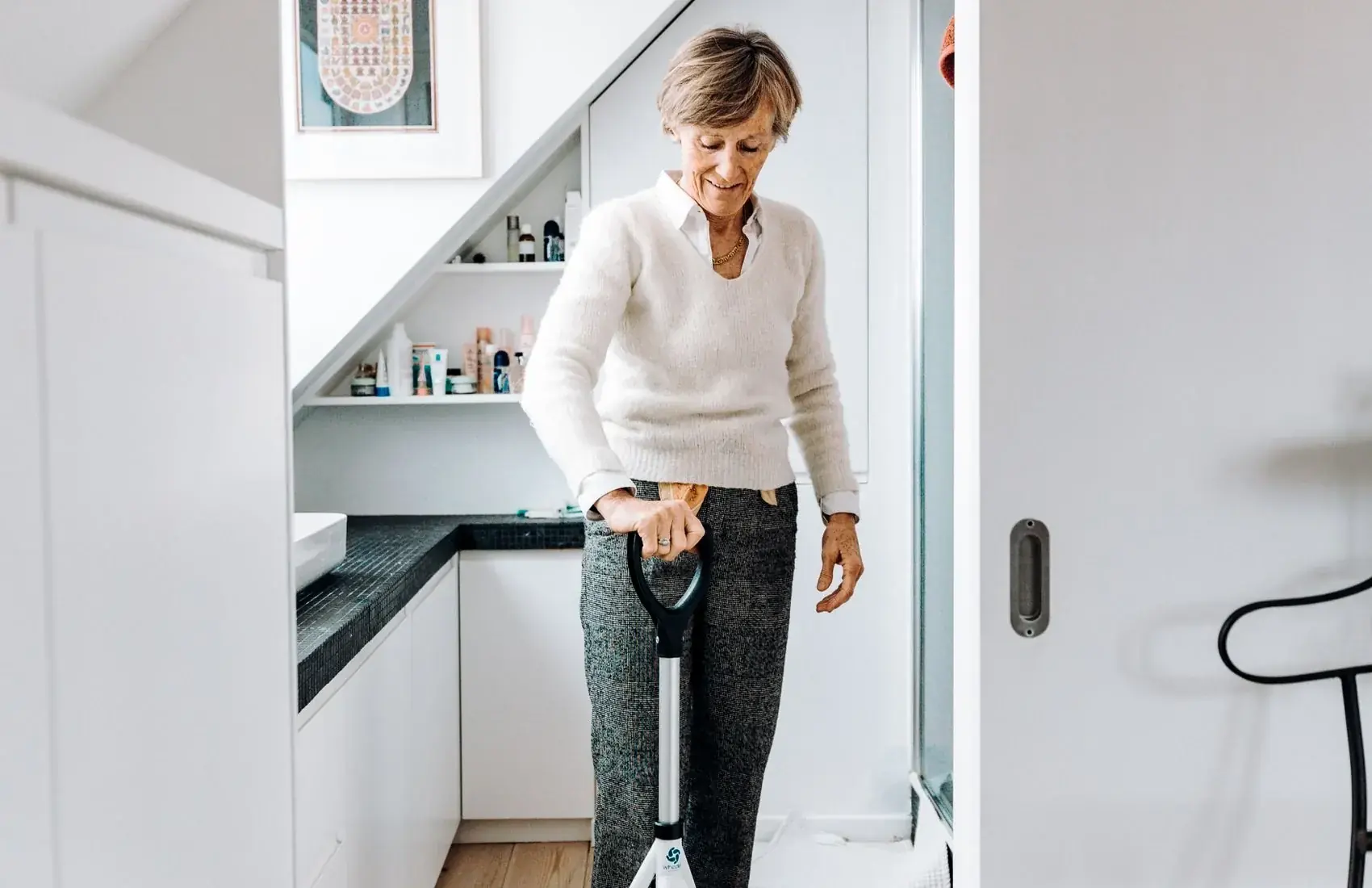
A realistic plan for a senior or disabled adult seeking mobility help
Start by choosing the right primary channel. If the need is essential in-home mobility, ask the clinician about Medicare or Medicaid DME. If the person is frail, at least 55, living in a PACE service area and meeting nursing-facility criteria, ask whether a local PACE program can assess enrollment. If a specific diagnosis is involved, a condition-focused organization may have a loan closet or navigation service. If the problem prevents employment, call the state VR agency.
Write down the program representative's name, intake phone number and what documentation the program actually needs. Ask whether an item is currently available, how long a loan lasts, who handles batteries and whether any delivery or deposit fee applies. If a charity refers you to another provider, call the provider directly before making a trip. Medical recommendations and insurance records should go only to official secure channels.
An accurate referral saves more effort than an impressive promise. The goal is to help someone move safely and participate in daily life, whether that ends with approved insurance equipment, a PACE care plan, a disease-specific loan, a neighborhood wheelchair closet or a service that helps the family find another route.
Historical Program Evolution: From 2018–2020 CMS PMD Prior Authorization to 2026 Mobility Grants
Earlier loan inventories and pandemic exceptions are historical context, not confirmation of today’s eligibility or device availability.
CMS power mobility policy and State Assistive Technology Act demonstration, loan, and reuse services established separate routes for medical insurance and community equipment.
Pandemic-era clinical flexibilities, equipment supply disruption, and emergency community reuse responses changed intake and temporary lending logistics.
Medicare power mobility policies, community independence referrals, rehabilitation seating practices, and aging/disability service networks continued evolving.
Original Medicare DME, Medicaid, PACE, condition-focused support, 29 U.S.C. §3001 State AT networks, CILs, and local loan closets remain separate; confirm current inventory and authorization.
Seniors, disability and scooter assistance FAQs
Program staff, clinicians and payers decide eligibility, availability and medical fit. Our answers explain how to approach them.
Can I get free mobility scooters for seniors without paying a fee?
Some qualifying Medicaid, PACE, QMB or nonprofit arrangements may eliminate some covered costs, but there is no universal free scooter application for all seniors. Confirm the medical evaluation, authorized supplier and any registration, battery or delivery fees.
Are mobility grants for disabled adults available for everyday travel?
State vocational rehabilitation may fund mobility-related assistive technology connected to an employment plan, and some local reuse programs offer devices. A generic government mobility grant for any outdoor trip is not guaranteed.
Is there a free scooter for disabled adults with MS or ALS?
A free scooter for disabled individuals may be available through an approved insurer or local equipment reuse program, subject to medical fit and inventory. The ALS Association may have an equipment loan program in your area, while MS Navigators can connect you to resources rather than guarantee a chair.
Does Medicare cover a mobility scooter just because I am 65 or older?
No. Original Medicare Part B assesses limitations affecting essential daily activities inside the home and the suitability of specific equipment. Age alone does not establish medical necessity.
Can the Parkinson's Foundation buy me a power wheelchair?
The Parkinson's Foundation says its helpline does not provide direct financial aid. Specialists can provide referrals to community organizations, professional care and other support programs that may help.
What is the minimum age for PACE enrollment?
PACE generally begins at age 55, but enrollees must also live in a PACE service area, meet state nursing-home level-of-care criteria and be safe in the community at enrollment. The PACE team decides which equipment and services are necessary.
How can I find an equipment loan closet near my elderly parent?
Ask the federal Eldercare Locator at 1-800-677-1116 for the local Area Agency on Aging and reach out to the state's AT program. Ask each provider whether the device is a short-term loan, a donated permanent transfer or a referral only.
What should a caregiver bring to the medical scooter assessment?
Bring a truthful description of daily activity limits, the aids already tried, transfer concerns, approximate doorway dimensions and the patient's care team's contact information. Do not provide SSNs or Medicare identifiers through unrelated online equipment ads.
Official program links and next-step resources
These are primary government and nonprofit source pages. They do not imply we have verified current local inventory or approved a benefit.
Prepare one accurate assessment before applying
Ask about safe transfers and medical necessity, then use Medicare, PACE, a relevant condition-specific resource or a trusted local equipment program.
Build Doctor-Visit Summary