
Check the original supplier before buying batteries
A working medical scooter can suddenly stop because of a failed charger, worn batteries or an electrical problem. You may have insurance, supplier or local repair options, but the first step is to identify the problem without risking an unsafe repair.
If a scooter suddenly stops, make safety the first repair decision
An unexpected scooter failure is more than an inconvenience. It can leave someone unable to reach the bathroom, get to a meal or return from an appointment. The easiest response is often to search for a cheaper replacement battery and hope it fixes everything. That approach can waste limited money and create a safety problem. Before touching the device, make sure the user is in a safe location and can use a suitable backup mobility aid.
Do not continue riding when the scooter accelerates unexpectedly, fails to stop, emits smoke, smells of burning plastic, has a damaged power cable or appears to have a hot or swollen battery. Switch it off using normal controls if safe, keep others away from the hazard and contact the supplier or an appropriately trained technician. Never open a damaged lithium battery pack or try to bypass a fuse to force the scooter to run.
Record the make, model, approximate purchase or delivery date, serial number in your own notes, whether the device is rented or patient-owned, and the symptom seen before it stopped. These are the facts a repair shop or DME supplier needs first. You do not need to give an unrelated directory your Medicare Beneficiary Identifier, Social Security number or full medical record to get general repair information.
Do not ride or charge equipment with a brake, heat, swelling or unpredictable control problem.
Contact the original supplier, insurer, VA PSAS, manufacturer or appropriate local service.
Ask for approved parts, diagnosis, parts/labor quote and repair authorization.
The battery may not be the problem: ask for a written diagnosis
A mobility scooter that will not charge might have a worn battery, a damaged charger, a disconnected cable, a blown fuse, a faulty charging port or a controller problem. Sometimes a loose battery box, park/freewheel lever or key switch creates a fault that looks like an expensive battery failure. A qualified repair provider should read the device's manual and error indicators before recommending replacement parts.
Describe the symptoms in plain words: the battery indicator drops suddenly on hills, the charger light never changes, a particular warning code appears, or the wheels move but braking is unreliable. Note when the problem started and whether the scooter was stored unused for a long period. These observations help a trained technician test the correct components. They are not instructions to dismantle the scooter or diagnose high-current electrical systems at home.
Ask the shop for an itemized written estimate covering diagnostic time, parts, labor, travel or delivery, taxes and warranty terms. If the diagnosis says new batteries are required, request the model-specific specification from the manufacturer or authorized provider and ask whether both batteries in a matched pair must be replaced. Never select a pack merely because its physical dimensions or connector looks similar.
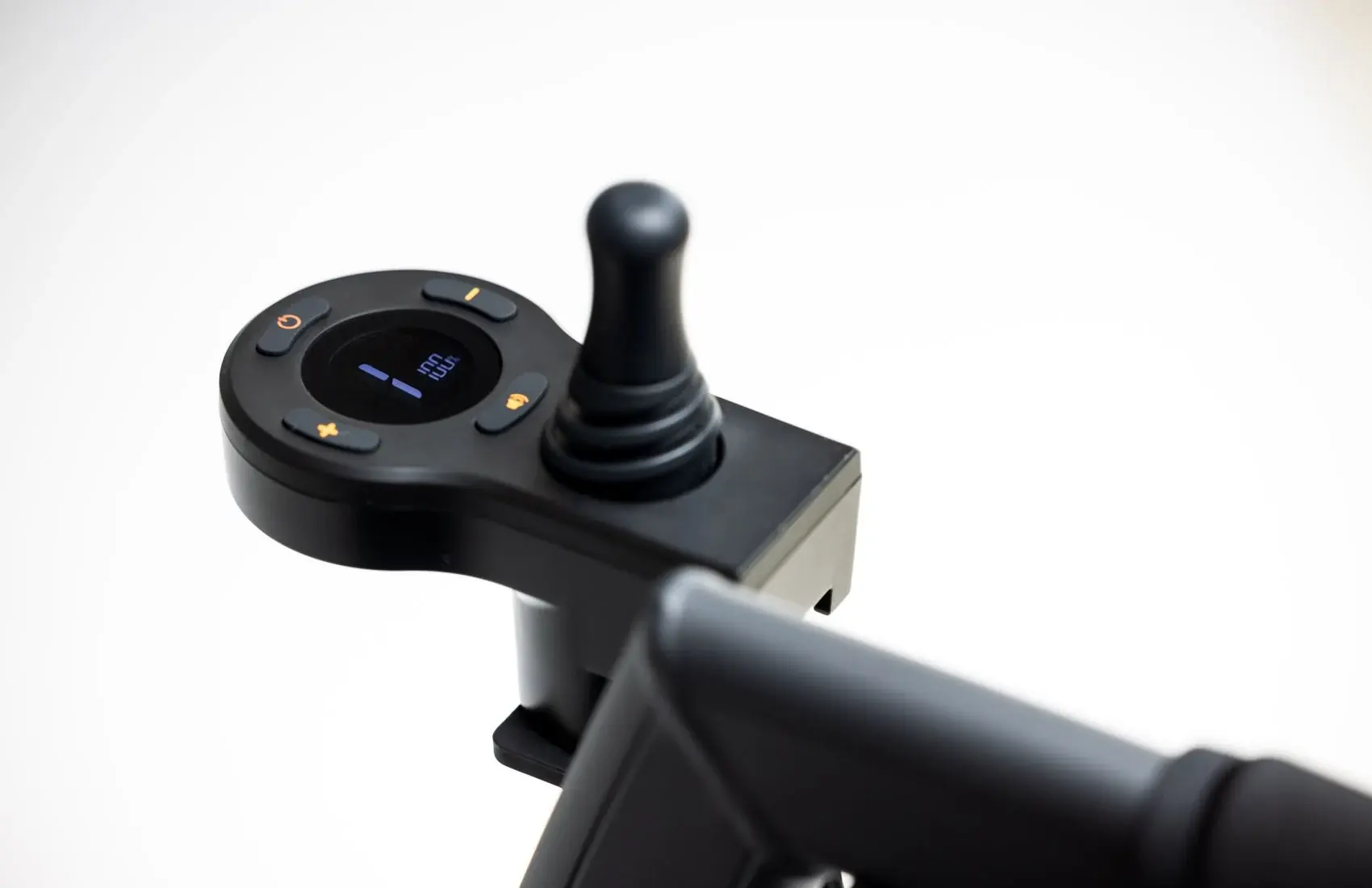
When Medicare scooter repairs are covered for patient-owned equipment
Medicare Part B may reimburse reasonable and necessary repairs to certain beneficiary-owned durable medical equipment when coverage and documentation rules are satisfied. CMS's Power Mobility Devices guidance states that covered power-operated vehicles and wheelchairs can have eligible parts and labor repairs. The rules are not a general household repair subsidy: the device must qualify, the repair must be reasonable and necessary, and a supplier must document the work correctly.
The CMS standard documentation article distinguishes repair from routine periodic maintenance. Repair means fixing or mending an item to restore good condition after damage or wear. Ordinary cleaning, testing, adjustment and similar routine upkeep are generally not covered as separate repair claims. Equipment under a manufacturer's warranty or certain rental agreements may also be serviced by the responsible supplier instead of producing a separate Medicare bill.
Ask the original DMEPOS supplier whether Medicare paid for the base device, whether you own it and whether the item remains medically necessary. CMS says a new treating practitioner's order generally is not needed merely for repairs, but continued medical need and the necessity of the repair must be documented. The supplier should explain the relevant code and claim process instead of promising automatic reimbursement for every part. Medicare scooter repairs should start with the original documented supplier, not an unsolicited caller.
| Original Medicare Part B (owned DME) | Necessary scooter or wheelchair parts and labor | Covered patient-owned equipment; continued need and repair documentation | 2026 deductible/coinsurance where applicable | Enrolled supplier; CMS PMD repair guidance |
| Supplier / manufacturer warranty | Eligible defective parts and authorized repair | Warranty period, terms, original seller and product | Covered warranty work; exclusions or travel fees may apply | Original supplier / manufacturer support |
| VA Prosthetics (PSAS) | VA-issued wheelchair/scooter repair or replacement | VA enrollment and clinical equipment need | VA authorization rules; no automatic retail reimbursement | Local VA PSAS office |
| State Medicaid DME | Plan-authorized repair, battery or device replacement | State coverage and approved supplier | State- and plan-specific | Medicaid agency or managed care |
| FODAC (Georgia) | Repair of wheelchairs and other home medical equipment | Appointment; eligible regional service and technician capacity | $25 mandatory repair fee; additional batteries/parts | FODAC equipment-repair desk |
| State AT programs / CILs | Repair referrals, loan device or reuse resources | Local inventory, service area and safe fit | Typically free referral; device fees vary | AT3 state program / ILRU CIL directory |
| Pride authorized provider | Model-specific chargers, batteries and service | Matching model, warranty, and provider service quote | Warranty-dependent; otherwise shop estimate | Pride dealer locator / support |
Models, approved amounts, device stock, actual fees and processing times are determined by the relevant payer, supplier, charity or lender. Check official terms before acting.
Repair versus replacement: understand the five-year useful-life framework
Medicare's reasonable useful lifetime for durable equipment is generally five years, but that does not mean a working scooter is automatically replaced on its fifth birthday. A replacement may require evidence that the device has reached its useful lifetime, is lost or stolen, or is irreparably damaged under applicable rules. Severe wear, non-medical preferences and desire for a newer travel model are different situations from covered loss or destruction.
Under 42 CFR §414.210(e)(4), an original supplier that transferred title to certain capped rental equipment has responsibilities when the item will not last its five-year reasonable useful life. CMS has explained that a DME Medicare Administrative Contractor may consider cumulative repair costs relative to replacement cost, including a 60% comparison, when making specific determinations. It is not an automatic consumer-facing rule that any repair bill above 60% buys a brand-new scooter.
Before replacing equipment yourself, request the written supplier finding and ask your payer whether repair or replacement authorization is appropriate. Medicare Advantage plans, state Medicaid programs and VA prosthetics operate under their own processes. If an essential mobility device is unsafe during the review, ask a clinician or local equipment loan program about a safe temporary option instead of paying for a second product without approval.
Power wheelchair batteries and chargers have specific HCPCS coding rules
CMS Wheelchair Options and Accessories policy lists separately payable sealed power-wheelchair batteries under codes such as E2359, E2361, E2363, E2365, E2371 and K0733 when coverage conditions are met. It describes up to two batteries at a time where required for a power wheelchair. Lithium-based battery E2397 has a different usual replacement-frequency rule and a one-battery-at-a-time limit. These details show why a generic 'scooter battery code' cannot be picked from an online shopping list.
CMS also distinguishes charger code E2366 for a single-mode sealed-lead-acid charger from other charger circumstances, and some items are included in the base equipment allowance. Codes and coverage rules for an actual scooter may differ from those for a wheelchair, and accessories need to meet relevant policy criteria. The authorized supplier must identify the device category, approved battery and billing relationship before anyone claims a particular replacement is reimbursable.
An E2361 or E2365 description is not a device-specific electrical specification. It does not tell a consumer which voltage, physical configuration, terminal style or lithium battery management system is safe. Ask the supplier for manufacturer-approved parts and the actual model manual. Electrical compatibility and Medicare coding solve different questions, and both need to be correct for a safe covered repair.
Charging and storage rules depend on your battery chemistry and manual
Many mobility devices use sealed lead-acid batteries, while some newer travel units rely on lithium-ion packs. Each technology may have different storage and charging rules. Pride Mobility's current lithium battery FAQ explicitly warns against substituting an unrelated charger and tells users to follow model-specific charging steps. A matching plug does not prove that a charger has the right current, voltage or safety communication.
Pride's general mobility FAQs discuss charging after daily use and using a maintenance schedule when the device is driven less often. Yet a manufacturer's detailed owner manual should control because not every battery uses the same charging behavior. A pack that has swollen, leaked, been submerged, become unusually hot or developed exposed wires should be inspected rather than repeatedly plugged in. Use a dry, appropriate charging location away from heat and flammable materials.
Do not attempt to rebuild lithium packs, mix old and new batteries in an unapproved set, bridge terminals or improvise a charging cable. These actions can damage electronics and present fire or injury risks. If the scooter has been stored for months, tell the provider how it was charged and whether the pack was disconnected. That history can help a technician decide what tests are appropriate.
Check manufacturer warranty, supplier responsibilities and insurance before paying
A warranty may cover a failed controller, drive component or another part while excluding routine wear items, accidental damage or service-call travel. The exact terms depend on product model, purchase date, battery manufacturer and any added service plan. Pride Mobility directs owners to their authorized providers for replacement parts, service and warranty questions. Do not assume a battery is covered by the same number of years as the scooter frame.
If the scooter was supplied through Medicare and still belongs to the supplier under a rental arrangement, do not approve an outside repair without first contacting that supplier. The repair may be included in the rental or supplier contract. If you own the item, a necessary repair may be separately considered, but warranty-covered labor or parts generally should not be billed as if Medicare must pay again. Keep the purchase, rental and warranty paperwork.
Before signing a repair authorization, ask for a separate line for diagnosis, battery, controller, labor and pickup or travel. Ask whether the company uses original or manufacturer-approved parts, whether any warranty is provided on the repair, and how long the equipment may be unavailable. This prevents a surprise bill and makes it easier to ask the insurance plan which charges, if any, it will review.
VA prosthetics and state Medicaid use different servicing channels
For a VA-issued power scooter or wheelchair, start with the VA Prosthetic and Sensory Aids Service office or the rehabilitation team that furnished the equipment. VA PSAS includes durable medical equipment service and can coordinate authorized repairs based on clinical need. An individual VA medical center may have a wheelchair repair contact with specific hours, but that local process does not establish the same walk-in arrangement nationwide.
State Medicaid repair and replacement rules differ by state and by managed care plan. A repair might require a participating supplier, prior authorization, continued medical need or documented proof that an item can no longer function. If Medicare is primary for a dual-eligible person, the insurer and Medicaid coordination rules should be clarified before requesting a repair under the wrong benefit. Ask the member-services line to provide the actual policy.
Do not purchase a battery for cash on the assumption that VA, Medicaid or Medicare will reimburse it afterward. Contact the authorized program first and keep evidence of supplier instructions. If an urgent equipment failure compromises safe daily activities, the clinician or case manager may help identify a temporary loan, a backup chair or a rehabilitation assessment while the claim is handled.
FODAC repair shop is a real low-cost example, not a national battery giveaway
Friends of Disabled Adults and Children (FODAC), EIN 58-1709436, publishes an equipment repair service in Georgia for wheelchairs and other home medical equipment, including devices not originally provided by the charity. The organization currently lists a mandatory $25 fee for each repair appointment and notes that some work, including new batteries, requires additional service charges. It does not advertise a universal free replacement battery for everyone in the United States.
FODAC's repair page says appointments are required and walk-in repairs are not performed. Call (770) 491-9014 and follow the repair option before making a trip. Ask whether the shop handles your model, the current list of prices, whether approved replacement batteries are available and if a technician can safely inspect the device. This is a regional program and service restrictions may apply.
When searching for a mobility scooter battery replacement grant, consider checking the nearest official state Assistive Technology Act program and local equipment reuse partners. Some may know repair events, discounted parts, short-term loans or local hardship resources, but no such offer should be described as active without confirmation. A real local repair is valuable even when it is not a grant. A mobility scooter battery replacement grant must be verified with its named funder.
Local CILs, AT Act reuse programs and emergency loan closets can help you plan
An insurance-covered repair can take longer than an urgent mobility need allows. Centers for Independent Living, the official AT3 state program directory and local Area Agencies on Aging may know equipment-reuse organizations. Many providers lend manual chairs or walkers, but powered scooters are harder to maintain and may not be stocked. Ask the organization directly whether it has an appropriately sized safe backup device and whether its program serves your county.
Some equipment exchanges provide a permanently refurbished chair, while others offer a temporary loan or device trial. If someone has substantial seating requirements, a generic borrowed scooter may not be appropriate. A treating clinician or therapist should help determine whether the user can transfer safely and operate the alternative controls. A free donated unit with a bad charger can be worse than a properly serviced loan.
An application for free mobility scooter repair should begin with the correct payer and service area, not a website requesting an upfront grant-unlocking payment. Our directory does not ship parts or collect benefit IDs. Use the charity and local loan closet guides for referral routes, then ask the actual supplier for a written service quote, refund rules and what happens if the repair fails.
Build a repair plan and itemized questions before calling the supplier
Organizing the problem in advance makes a service call more effective. Select your symptom, ownership situation, possible insurer and whether a warranty may apply in the private repair planner below. It generates the questions to ask next, including when to contact the original supplier, how to request a written estimate and which official sources are relevant. It does not diagnose a battery or send a repair request.
The worksheet also lets you enter an optional hypothetical amount for parts, labor and pickup so you can see the sum before discussing authorization. That total is a shop-price illustration, not a Medicare-approved amount or a charitable award. No tax, insurance adjustment or unquoted parts are included. A $0 result only means you entered zero charges, not that a person qualified for a free battery.
Copy the call checklist to your notes or print it for an appointment. Avoid entering a Social Security number, Medicare MBI, VA case number or sensitive medical history. Ask the provider to inspect brakes, control safety and battery compatibility before returning the scooter to use, especially if the original failure involved unpredictable stopping or electrical overheating.
Mobility scooter repair route & written estimate planner
Describe a broad equipment symptom and ownership category. Get the responsible program to call and questions to ask without sharing medical or financial identifiers.
Never open a battery pack, bypass a fuse, drive with failed brakes or charge a damaged battery. This worksheet does not diagnose equipment, approve a claim or contact a provider.
How to decide the next safe step when the scooter may be beyond repair
Ask for two separate figures: the total documented cost to restore the existing medical equipment safely and the cost or covered process for a clinically appropriate replacement. A cheap repair may make sense when the frame and electronics are sound. Repeated controller failures, structural damage or unavailable replacement parts can change the decision. A technician should explain whether repair restores reliable function rather than merely turning the display back on.
Your clinical need may also have changed since the original scooter was delivered. If transfers are no longer safe, a joystick power wheelchair or different seating assessment may be more appropriate than spending money on the same tiller scooter. Bring that concern to the treating practitioner and supplier. Medicare's replacement rules, Medicaid plan policy or VA medical assessment should guide any new authorization, rather than a retailer promising a refund for a newer device.
Historical Program Evolution: From 2018–2020 CMS PMD Prior Authorization to 2026 Mobility Grants
Historic rules, temporary emergency allowances and older price lists cannot establish individual coverage or availability for 2026 claims.
Medicare PMD documentation, supplier coding and prior authorization continued evolving while local equipment reuse and warranty programs supported repairs.
Emergency clinical flexibilities, medical equipment supply shortages and battery procurement disruptions affected some service and supplier processes.
CMS clarified certain power mobility and accessory requirements; suppliers continued applying warranty, repair, replacement and clinical fit rules.
Original Medicare Part B, Medicaid, VA PSAS, manufacturer providers and local reuse centers remain distinct. Verify current HCPCS codes, authorization, costs and availability.
Mobility scooter repair and battery FAQs
These answers explain general pathways. No claim, repair, purchase or financing application is approved by this site.
Does Medicare pay for mobility scooter battery replacement?
Medicare may cover medically necessary parts and repairs for certain covered, patient-owned DME, depending on documentation and coding. Batteries are not automatically covered just because a scooter uses electricity; ask the original supplier about the exact item and payer rules.
Are there free mobility scooter repair grants nationwide?
No single federal program guarantees free repairs or battery packs for every disabled adult. Medicare, Medicaid, VA PSAS and local nonprofit repair or device reuse programs have different eligibility and service-area rules.
Does FODAC repair power wheelchairs if they did not provide them?
FODAC says its repair shop services wheelchairs and other home medical equipment even when the device came from elsewhere. An appointment is required, a $25 repair fee applies and additional charges, including batteries, may be due.
Can I use a universal charger with my medical scooter?
Do not use an unapproved charger even when the plug fits. Follow the manufacturer's manual for the battery chemistry and model, and contact an authorized provider if the charging system is faulty.
Is routine scooter cleaning paid for by Medicare?
Generally no. Medicare distinguishes necessary repairs from periodic testing, cleaning, adjustment and other routine maintenance; warranty or rental service responsibilities can also change payment.
What happens if my Medicare power chair fails before five years?
Ask the supplier and the Medicare Administrative Contractor about repair or replacement rules. The five-year reasonable useful lifetime and certain supplier replacement responsibilities do not create an automatic new equipment award after any breakdown.
Can the VA repair or replace a wheelchair it supplied?
A veteran should contact the issuing VA PSAS or rehabilitation team. Equipment repair and replacement are handled through VA clinical and local servicing procedures, not a guaranteed retail reimbursement.
What should I do if the battery is swollen or the brakes fail?
Stop using the mobility device and do not charge a visibly damaged battery. Move to a safe accessible area and arrange qualified inspection; avoid attempting high-current battery, brake or controller repairs yourself.
Use official policy, manufacturer and nonprofit sources
Source pages and actual product classifications can change. Confirm the current edition and responsible program before sharing medical or financial records.
Start with a written, safe repair assessment
Confirm ownership, warranty and responsible payer first. Ask a qualified technician for an itemized diagnosis before buying batteries or controllers.
Open Repair Planner